
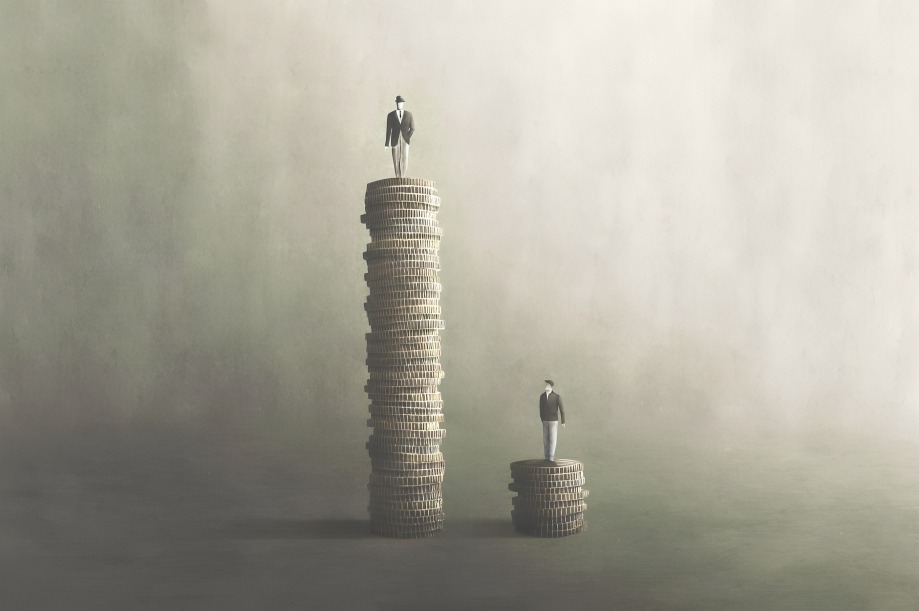
Once considered a moral failing, greed has undergone a curious transformation. In today’s fast-paced, hyper-capitalist society, the once-villainous impulse to want “more” — more money, more power, more status — is often admired, encouraged, and even rewarded. Somewhere between Wall Street’s golden parachutes, Silicon Valley’s unicorn dreams, and the relentless influencer economy, greed stopped being a sin and started being a strategy.
Welcome to the age of “Survival of the Greediest”, where ambition is glorified, accumulation is equated with success, and ethical hesitation is seen as weakness. But how did we get here? And what are the consequences of turning greed into a virtue?
The Evolution of Greed: From Vice to Vision
In ancient philosophy and religious teachings, greed was universally condemned. Christianity viewed it as one of the Seven Deadly Sins. Buddhism considered it a cause of suffering. Even early capitalism, as envisioned by thinkers like Adam Smith, warned against selfishness unchecked by empathy or morality.
But the 20th century ushered in a new era. By the 1980s, the phrase “Greed is good” — famously declared by Gordon Gekko in Wall Street — captured a growing cultural sentiment. The idea was simple and seductive: greed drives innovation, growth, and economic power. And in a world where money equals freedom, greed became a rational — even necessary — mindset.
The Market Loves the Greedy
In a global system built on consumption, greed doesn’t just survive — it thrives. Businesses reward executives who slash jobs but boost profits. Venture capitalists fund startups not because they help society, but because they promise explosive returns. Social media rewards the loudest, most extravagant, most self-promoting voices with attention and influence.
In this ecosystem:
- Hustle culture romanticizes burnout in the name of personal wealth.
- Luxury marketing convinces us that status is earned by owning more than others.
- Tech billionaires are idolized, regardless of labor practices or societal impact.
Greed, once a hidden impulse, is now a performance — and often, a brand.
When Greed Wears a Mask
Greed today doesn’t always look like gold bars and private jets. It can wear the mask of:
- Ambition: “I just want to be the best.”
- Efficiency: “Cutting corners is just smart business.”
- Freedom: “I deserve to live life on my own terms.”
But beneath these justifications often lies a deeper desire: to acquire more than one needs, at the expense of others. And while not all ambition is greed, the line between the two is thinner than we like to admit.
The Consequences of Normalized Greed
The moral cost of greed-as-virtue is enormous. It fuels income inequality, erodes empathy, and turns relationships into transactions. It tells us that worth is measured in wealth, and that if you’re poor, you simply didn’t want it enough.
Even worse, it encourages a scarcity mindset — the belief that there’s not enough to go around, so you must take it before someone else does. This mindset breeds fear, division, and an “every man for himself” attitude that undermines community and cooperation.
Is There a Greed Detox?
It’s easy to feel trapped in a system that rewards excess. But individuals and cultures do have the power to shift values.
Here are a few ways we can challenge the cult of greed:
- Redefine success: Focus less on net worth and more on impact, relationships, and fulfillment.
- Consume consciously: Support businesses that prioritize ethics over profit.
- Practice generosity: Not just with money, but with time, compassion, and attention.
- Value collaboration over competition: Greed isolates; generosity connects.
Conclusion
Greed, once shunned, has climbed the ladder to social acceptance. But in glorifying it, we’ve lost sight of balance, of justice, and of what it means to truly thrive as a society.
“Survival of the greediest” may create winners in the short term — but it builds a world where everyone ultimately loses. The real challenge isn’t just surviving — it’s deciding what kind of world we want to live in. And maybe, just maybe, that world begins where greed ends.
