
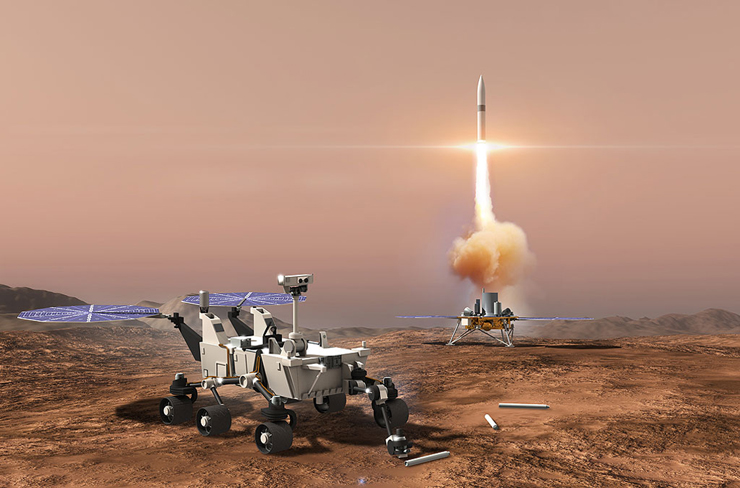
NASA’s mission to explore Mars has reached an exciting phase with plans for a Mars Sample Return mission. As part of this ambitious endeavour, NASA is funding 10 studies, many of which involve collaboration with commercial partners. Let’s delve into the significance of these studies and how they could pave the way for groundbreaking discoveries in space exploration.
Understanding Mars Sample Return
The Mars Sample Return mission aims to collect samples from the Martian surface and return them to Earth for detailed analysis. This undertaking holds immense scientific potential, as the samples could provide valuable insights into Mars’ geological history, potential for past life, and the possibility of human exploration in the future.
NASA’s Collaborative Approach
Recognizing the complexity and scale of the Mars Sample Return mission, NASA is partnering with commercial entities to leverage their expertise and resources. By engaging with industry partners, NASA aims to enhance mission capabilities, reduce costs, and accelerate progress towards achieving its scientific objectives.
The Importance of Commercial Partnerships
Access to Innovative Technologies: Commercial partners bring cutting-edge technologies and innovations to the table, enabling NASA to overcome technical challenges and achieve mission goals more efficiently.
Cost-Effectiveness:
Collaborating with commercial entities can help NASA optimise resource utilisation and reduce overall mission costs. Leveraging commercial capabilities allows NASA to maximise the value of taxpayer funding and achieve greater cost-effectiveness.
Accelerated Progress:
By tapping into the expertise of commercial partners, NASA can accelerate the pace of progress and expedite the development and implementation of critical mission components. This collaborative approach enables NASA to meet ambitious timelines and milestones more effectively.
Overview of the 10 Studies
Sample Collection Technologies:
Studies focusing on developing innovative technologies for sample collection, including robotic arms, drilling systems, and sample containment mechanisms.
Sample Preservation and Storage:
Research into methods for preserving and storing Martian samples during transit and upon arrival on Earth, ensuring their integrity for scientific analysis.
Sample Analysis Techniques:
Investigations into advanced analytical techniques for studying Martian samples, such as spectroscopy, microscopy, and molecular analysis methods.
Planetary Protection Measures:
Studies addressing planetary protection protocols to prevent contamination of Martian samples with terrestrial organisms and ensure the integrity of scientific findings.
Integration and Logistics:
Research into the integration and logistical aspects of the Mars Sample Return mission, including spacecraft design, launch vehicle selection, and mission planning.
Potential Benefits of Mars Sample Return
Unprecedented Scientific Discoveries:
The analysis of Martian samples could unlock new insights into the planet’s geology, climate history, and potential for habitability, advancing our understanding of Mars and its place in the solar system.
Preparation for Human Exploration:
Studying Martian samples on Earth could provide valuable data and insights to inform future human exploration missions to Mars, helping to mitigate risks and optimise mission planning.
Inspiring the Next Generation:
The Mars Sample Return mission captures the imagination of people worldwide and inspires the next generation of scientists, engineers, and explorers to pursue careers in space exploration and STEM fields.
Conclusion
NASA’s investment in 10 studies on Mars Sample Return, with a focus on commercial partnerships, underscores the agency’s commitment to advancing scientific exploration while leveraging the capabilities of the private sector. By collaborating with commercial entities, NASA is poised to overcome technical challenges, accelerate progress, and unlock the full potential of the Mars Sample Return mission. As humanity takes its next steps towards exploring Mars and unravelling its mysteries, these collaborative efforts will play a pivotal role in shaping the future of space exploration.
