
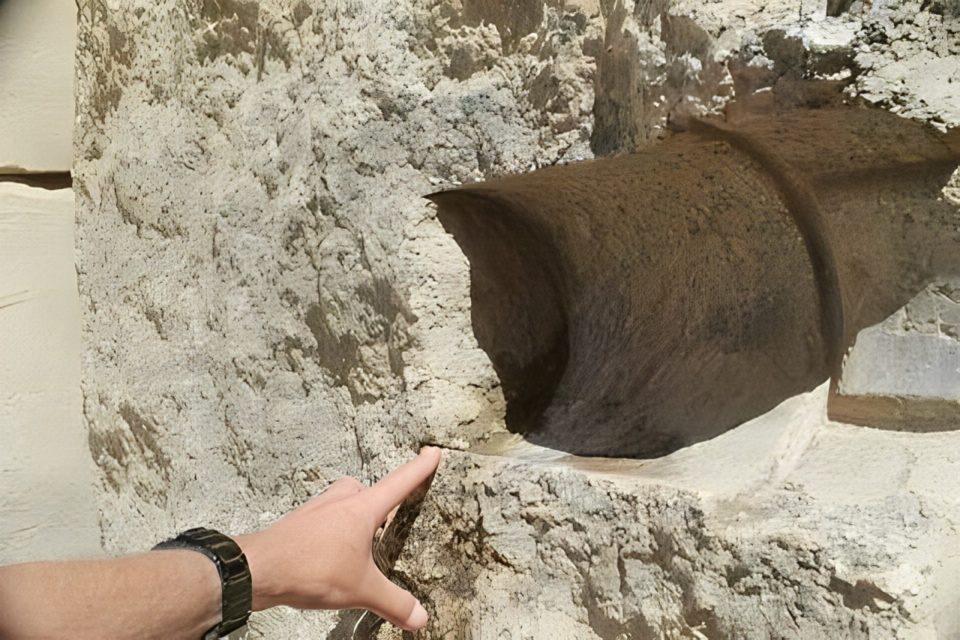
Ancient civilizations, despite lacking modern tools and scientific knowledge, developed remarkable technologies that often puzzle contemporary researchers. Some of these technologies have been lost to history, leaving us to marvel at their ingenuity and wonder how they were achieved. Here, we explore some of the most fascinating lost technologies of ancient times.
Greek Fire
Greek Fire was an incendiary weapon used by the Byzantine Empire, particularly effective in naval warfare. Its exact composition remains a mystery, but historical accounts describe it as a liquid that could ignite on water, making it deadly against enemy ships. The formula was a closely guarded state secret, and despite numerous attempts, modern scientists have not been able to recreate it accurately. The weapon’s ability to stick to surfaces and continue burning was unparalleled, making it one of the most feared technologies of its time.
Roman Concrete
The Romans built structures that have stood the test of time, thanks in part to their advanced concrete technology. Unlike modern concrete, which can degrade relatively quickly, Roman concrete has proven to be incredibly durable. Researchers have discovered that the secret lies in the use of volcanic ash, which helps the material to withstand cracking. However, the precise mixing techniques and proportions used by the Romans are still not fully understood. This lost art has led to a renewed interest in learning from ancient methods to improve modern construction practices.
Damascus Steel
Damascus steel was used to make blades renowned for their strength, flexibility, and ability to hold a sharp edge. These blades were characterized by a distinctive wavy pattern on their surface. The original method of producing Damascus steel, which dates back to around 300 BCE, was lost in the 18th century. The exact process likely involved a combination of high-carbon steel, specific forging techniques, and possibly unique quenching methods. Modern metallurgists have tried to replicate the process, but the original secrets remain elusive.
Antikythera Mechanism
Discovered in an ancient shipwreck off the coast of Greece, the Antikythera mechanism is often described as the world’s first analog computer. Dating back to around 100 BCE, this complex device was used to predict astronomical positions and eclipses. The mechanism consisted of numerous gears and dials, demonstrating a level of mechanical sophistication that was not thought to have existed until much later. Despite extensive study, the full extent of its capabilities and the knowledge required to create such a device are still not fully understood.
Egyptian Pyramids Construction Techniques
The construction of the Egyptian pyramids, particularly the Great Pyramid of Giza, has long fascinated historians and engineers. The precision with which these massive structures were built, using millions of stone blocks, each weighing several tons, raises questions about the techniques employed. Various theories suggest the use of ramps, cranes, or even advanced surveying tools, but no definitive evidence has been found. The exact methods remain one of the greatest mysteries of ancient engineering.
Incan Masonry
The Inca civilization of South America is known for its impressive masonry, with structures that have withstood centuries of earthquakes. Incan builders constructed walls with precisely cut stones that fit together without mortar, in a technique known as ashlar masonry. The precision of the stone cutting and the understanding of seismic forces are aspects of Incan construction that modern builders find difficult to replicate. The loss of this knowledge, along with the Spanish conquest, means that the full techniques used by the Incas are still not fully understood.
Baghdad Battery
The Baghdad Battery, discovered in Iraq and dating back to the Parthian or Sassanid periods (roughly 150 BCE to 650 CE), is a set of artifacts that some believe to be an ancient form of electrochemical cell. The artifact consists of a clay jar with a copper cylinder and an iron rod, suggesting it could produce a small electric charge. While the purpose of the Baghdad Battery remains debated, some theories propose it could have been used for electroplating or as a primitive battery. The knowledge and application of such technology in ancient times continues to intrigue researchers.
Conclusion
The lost technologies of ancient times demonstrate the ingenuity and sophistication of early civilizations. While many of these technologies remain shrouded in mystery, ongoing research and modern scientific techniques continue to uncover new insights. Understanding these ancient technologies not only provides a window into the past but also offers potential innovations for the future. The quest to rediscover these lost arts reminds us of the incredible capabilities of human creativity and ingenuity across the ages.
