
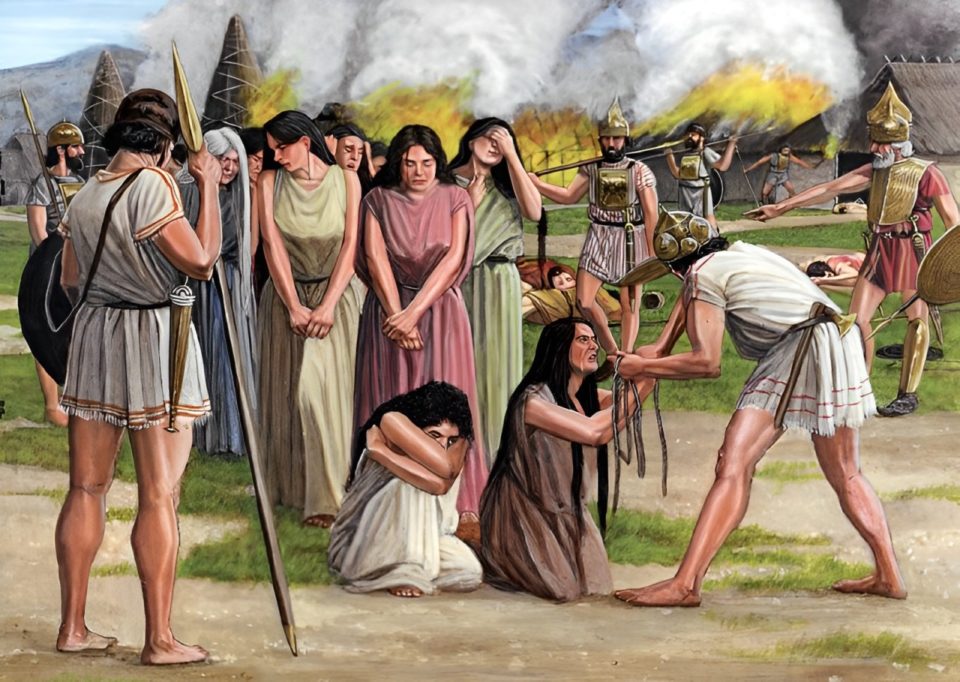
Throughout the vast history of the Roman Empire, numerous tales of heroism and sacrifice have emerged, but one of the lesser-known yet profoundly impactful stories is that of the slave women who played a crucial role in saving Rome. These women, often overlooked in the grand narratives of history, demonstrated remarkable courage and resourcefulness, proving that heroism knows no bounds of status or gender. Here’s a closer look at how slave women made a significant mark on the history of Rome.
The Context of Their Heroism
Rome Under Siege: The story of these courageous women is set during a time of immense crisis for Rome. The city faced numerous threats from external forces, including invasions and internal strife. During these perilous times, every citizen, including slaves, played a crucial role in defending the city.
Role of Slavery in Rome: Slavery was an integral part of Roman society, with slaves performing various roles from household chores to skilled labor. Despite their often harsh and oppressive conditions, slaves were essential to the functioning of the Roman economy and society.
The Tale of the Sabine Women
One of the most famous instances of slave women impacting Rome’s fate is intertwined with the legendary tale of the Sabine women. While not all of the Sabine women were slaves, their story highlights the influence and bravery of women during early Rome.
The Abduction of the Sabine Women: According to legend, the early Romans, led by Romulus, abducted women from the neighboring Sabine tribe to address a shortage of women and secure the future of Rome. This act led to conflict between the Romans and the Sabines.
Mediators of Peace: The Sabine women, many of whom were in a position of subjugation similar to slaves, intervened during a fierce battle between their Roman husbands and Sabine fathers. Their courageous act of stepping onto the battlefield to plead for peace resulted in a truce and the eventual unification of the two peoples, strengthening Rome.
The Heroic Act of Cloelia
Another notable story is that of Cloelia, a young Roman maiden taken as a hostage by the Etruscan king Lars Porsena during his siege of Rome.
Daring Escape: Cloelia, along with other Roman maidens, managed to escape from the Etruscan camp by swimming across the Tiber River under a hail of arrows. Her bravery not only demonstrated the resilience and courage of Roman women but also led to a significant diplomatic outcome.
Honored by Rome: Recognizing her bravery, Porsena allowed Cloelia to choose half of the remaining hostages to be freed. She chose the youngest and most vulnerable, showcasing her selflessness. Rome honored Cloelia with an equestrian statue, a rare honor for a woman, let alone a young maiden.
The Role of Slave Women During Invasions
Defense of the City: During various invasions, including those by the Gauls and other barbarian tribes, slave women were known to participate actively in the defense of Rome. They provided logistical support, such as preparing food and caring for the wounded, and sometimes even took up arms.
Espionage and Intelligence: Slave women, due to their often unnoticed presence, served as spies and messengers. Their ability to move relatively freely and access different parts of the city allowed them to gather and relay crucial information that helped in strategic planning and countering enemy movements.
The Symbol of Resilience and Sacrifice
Daily Struggles: Beyond these notable historical instances, slave women in Rome constantly displayed resilience and fortitude in their daily lives. Their labor and sacrifices were instrumental in maintaining the societal structure and economy of Rome.
Cultural Impact: The stories of these women, though not always recorded in great detail, contributed to the cultural and moral fabric of Rome. Their acts of bravery and sacrifice became part of the collective memory and values of Roman society, emphasizing the importance of every individual’s contribution to the greater good.
Conclusion
The narrative of slave women saving Rome is a testament to the often-overlooked contributions of marginalized groups in history. These women, through their courage, resilience, and selflessness, played pivotal roles during critical moments in Rome’s history. Their stories serve as powerful reminders that heroism transcends social status and that every individual’s actions can profoundly impact the course of history. As we reflect on these tales, we recognize the enduring legacy of these unsung heroines who helped shape the destiny of Rome.
