
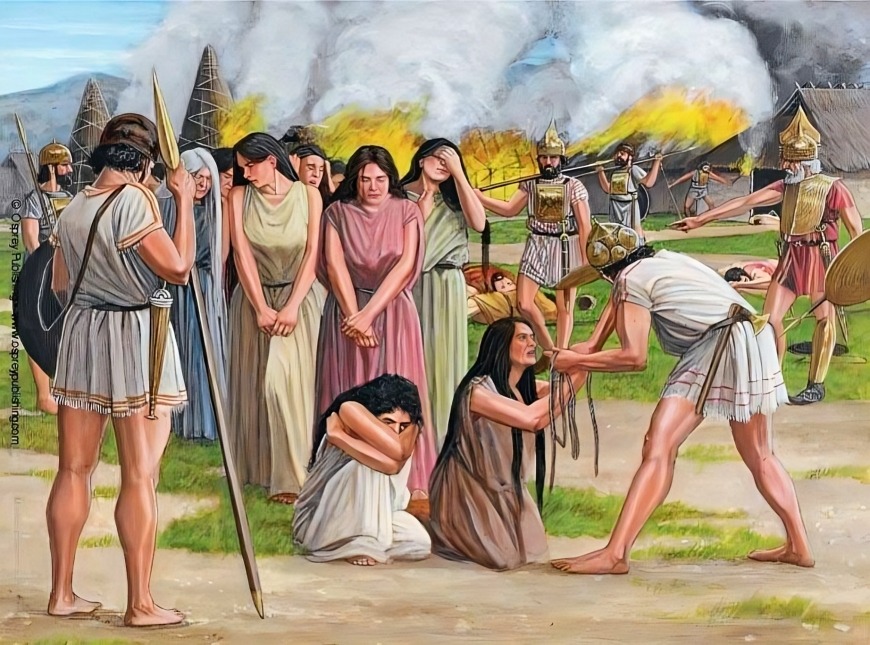
The Roman Empire, known for its art, architecture, military power, and political genius, also had a darker side: slavery. Enslaved people were a crucial part of Rome’s economy and society, from working the fields and serving in households to entertaining the elite.
Among the enslaved, attractive young women—especially those deemed exotic or beautiful by Roman standards—were often sold at shockingly high prices. But how much did they actually cost? And what does that tell us about Roman society?
Let’s explore this unsettling but historically important topic.
Slavery in Ancient Rome: A Brief Overview
Slavery was deeply woven into the fabric of Roman life. Enslaved individuals were not viewed as people with rights but as property that could be bought, sold, punished, or freed at their owner’s whim. Slaves were acquired through conquest, piracy, birth, or trade.
They came from all walks of life—Greeks, Gauls, Syrians, North Africans—and their value varied dramatically based on their skills, appearance, age, education, and origin.
Price of Slaves in Ancient Rome
The cost of a slave in Rome was far from fixed. A laborer or field slave might be sold for as little as 500–2,000 sesterces. But skilled or attractive slaves could fetch 5,000, 10,000, or even 100,000 sesterces.
To put this in perspective:
- A Roman legionary soldier earned about 900 sesterces a year.
- A modest house in Rome might cost 40,000–50,000 sesterces.
- A wealthy Roman senator might have an estate of several million sesterces.
What About a “Beautiful” Slave Girl?
Beauty, youth, and perceived refinement could drastically increase a female slave’s price. Girls considered beautiful—especially from culturally admired regions like Greece, Egypt, or Asia Minor—were often treated as luxury items.
Prices varied, but some records and writings suggest:
- A young, attractive girl might sell for 10,000 to 30,000 sesterces.
- Exceptionally “exotic” or highly skilled slaves might be sold for 50,000 sesterces or more.
- In extreme cases, women with multiple desirable qualities—beauty, music ability, literacy—could fetch prices of 100,000 sesterces or higher.
These women were often purchased as concubines, companions, or entertainers—a reflection of both the objectification they faced and the brutal social hierarchy of Roman society.
The Human Cost Behind the Numbers
While it may be tempting to compare ancient values in today’s currency, it’s important to remember that these were human lives, not merchandise. The trade in enslaved women—especially for their appearance—reveals how deeply embedded inequality, exploitation, and gender power imbalances were in the ancient world.
Being labeled “beautiful” often made an enslaved girl more desirable and more vulnerable. She might receive better treatment in a wealthy home, but she also faced higher chances of exploitation, especially sexual.
Reflections from Roman Writers
Some Roman authors like Seneca and Cicero commented on the treatment of slaves and the moral decay that came with Rome’s obsession with wealth and luxury. Others, like Juvenal, mocked the elite for flaunting their expensive slaves as status symbols.
Still, none of these critiques seriously questioned the institution of slavery itself—it was simply an accepted part of life.
Conclusion
The cost of a beautiful slave girl in ancient Rome wasn’t just measured in sesterces—it was a reflection of a society that valued appearance, youth, and obedience above humanity. These women were bought and sold not for who they were, but for how they looked and what pleasure they could bring to their owners.
Understanding these historical realities is essential—not to glorify them, but to remember them. Behind every figure and price was a person: someone who laughed, cried, dreamed, and deserved freedom.
Would you like a visual timeline, quote highlights, or historical sources for further reading? I’m happy to help expand this.
