
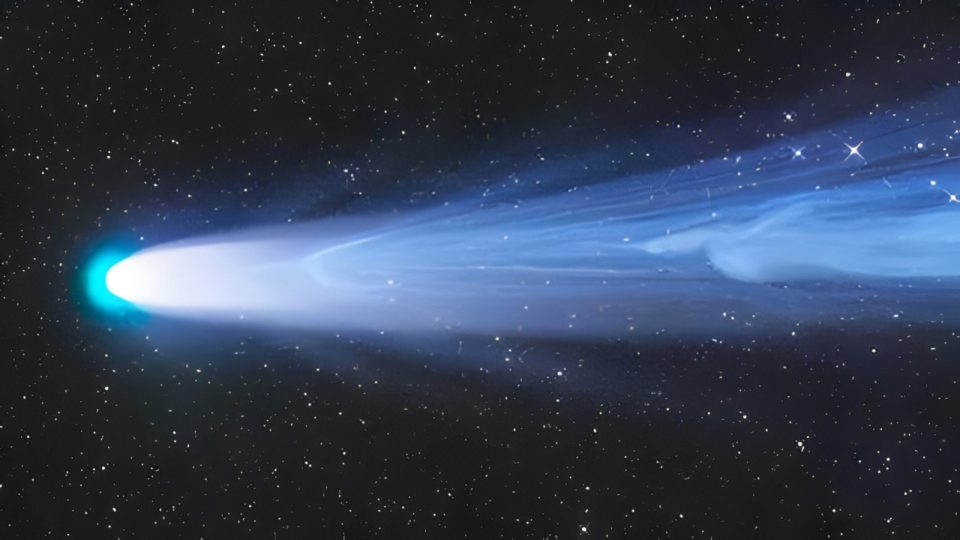
The night sky has long been a source of wonder and mystery, inspiring stargazers and astronomers alike. Occasionally, we’re graced with a breathtaking celestial phenomenon that captures our imaginations and takes us on a journey beyond our planet. One such event is the arrival of a spectacular comet that promises to be one of the most dazzling displays in recent memory.
Here’s why you absolutely shouldn’t miss this stunning comet and how you can witness it in all its glory.
What Makes This Comet So Special?
Comets are icy remnants from the outer reaches of our solar system, often referred to as “dirty snowballs.” When they approach the sun, their icy compositions vaporize, creating a glowing coma and a brilliant tail. While comets have been observed for centuries, few manage to make a lasting impression on skywatchers.
This particular comet, which is predicted to be visible to the naked eye, is unique for several reasons:
Rare Appearance: Comets like this one don’t pass by Earth often. Their orbits are long and elliptical, meaning that we might not see this comet again for hundreds or even thousands of years.
Bright Visibility: Experts predict that this comet will be bright enough to be seen without the aid of telescopes, making it accessible to stargazers of all levels.
Striking Tail and Coma: The comet’s tail, often millions of miles long, will shimmer with vibrant colors, creating a dazzling spectacle as it streaks across the night sky.
When and Where to See the Comet
The comet’s path across the sky has been carefully tracked, and astronomers are excited to share this event with the public. Here’s what you need to know to catch the best views:
Timing
The best time to view the comet will be during its closest approach to Earth, which is expected to occur [insert date, e.g., “in early December 2024”]. Depending on your location, you’ll have a chance to see it at different times, with the comet being most visible after sunset or before dawn. The exact timing can vary based on your geographic location, so it’s important to check local stargazing schedules or apps for precise information.
Viewing Locations
The best places to view the comet are areas away from city lights. Head to local parks, beaches, or mountain lookouts to escape light pollution and get the clearest view of the night sky. If you live in a city, you can still get a glimpse of the comet, but the tail and coma may not be as visible as they would be in more rural settings.
Binoculars or Telescope?
While the comet is bright enough to be seen without a telescope, using binoculars or a small telescope can enhance the experience. You’ll be able to spot more details of the comet’s tail and coma, and telescopes will allow you to get a closer look at its core.
How to Spot the Comet
If you’ve never had the chance to hunt for a comet in the sky, it’s easier than it sounds. Here’s how to locate the comet with minimal effort:
Find a Dark Spot: As mentioned, find a place with minimal light pollution. Even a backyard away from streetlights can provide a good vantage point.
Look Toward the Horizon: The comet will appear in the western sky after sunset or in the eastern sky before sunrise.
Follow Astronomical Charts: Use free apps or websites like Stellarium or SkySafari to help you locate the comet. These apps provide real-time, interactive maps of the night sky, making it easier to track celestial bodies like this one.
Be Patient: Comet watching requires some patience. If the sky is cloudy or the comet isn’t immediately visible, don’t worry—stay patient and keep your eyes on the skies.
Why You Shouldn’t Miss This Event
Seeing a comet is one of the rarest and most awe-inspiring experiences that the night sky can offer. For many people, the sight of a bright comet streaking across the sky can feel like a once-in-a-lifetime event. Here are a few reasons why you should make sure to catch this spectacle:
The Cosmic Connection: Comets are ancient travelers from the outer reaches of the solar system. Observing one can give you a deeper sense of connection to the universe and its mysteries.
Shared Experience: Whether you’re with friends, family, or fellow skywatchers, witnessing a comet can be a powerful, unifying experience. It’s a shared moment of awe that reminds us all of the vastness and beauty of the cosmos.
Inspiration and Wonder: Comets have long been symbols of change, mystery, and hope. Seeing one up close can spark your own imagination, wonder, and sense of possibility, just as it has for countless people throughout history.
Conclusion
This upcoming comet promises to be one of the most spectacular celestial events in recent history. With its bright glow and long, sweeping tail, it offers an unforgettable opportunity to witness the beauty of the universe. Don’t miss your chance to see this once-in-a-lifetime spectacle—whether you’re an experienced astronomer or a casual skywatcher, it’s sure to leave you with a sense of awe and wonder.
Mark your calendars, prepare your binoculars, and get ready to look up at the sky—this is one cosmic event you won’t want to miss.
