
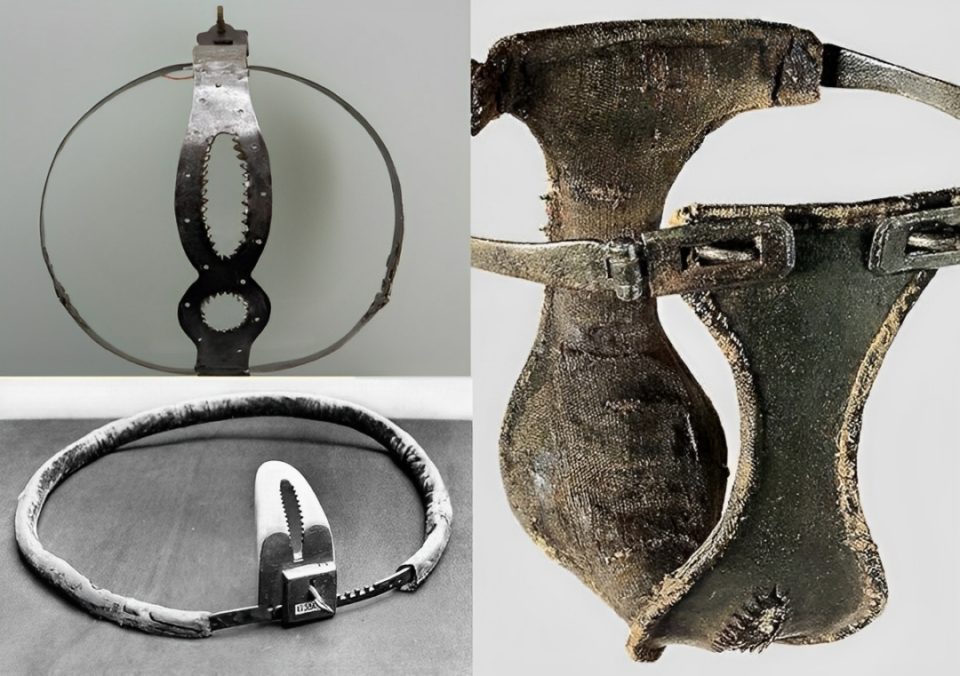
The chastity belt is one of the most intriguing and controversial artifacts of the medieval world. Often depicted as a cruel metal device designed to prevent women from engaging in sexual activity, it has been featured in historical discussions, literature, and even modern pop culture. But how much of what we believe about chastity belts is actually true?
Were these devices really widespread instruments of female oppression, or is their history more myth than reality? The idea that medieval men forced their wives to wear chastity belts while they were away at war is a common belief, but historians have questioned the validity of such claims.
This article delves into the origins, supposed use, and historical evidence of chastity belts to determine whether they were genuine medieval tools or merely a fabrication created by later generations.
The Supposed Purpose of Chastity Belts
A Tool of Fidelity and Control
According to legend, chastity belts were primarily used to ensure a woman’s faithfulness while her husband was away, particularly during the Crusades (11th–13th centuries). The idea was that knights and noblemen, fearing that their wives might be unfaithful while they fought in distant lands, locked them into metal belts that could only be opened with a key.
A Device for Protecting Virtue
Another theory suggests that chastity belts were used to prevent premarital sex or protect women from sexual assault. Parents, guardians, or husbands may have allegedly used these devices to ensure that their daughters or wives remain “pure” until marriage.
A Form of Punishment or Humiliation
Some historical accounts claim that chastity belts were used as a means of punishing women accused of adultery or promiscuity. The painful and restrictive nature of the device would have served as a deterrent for engaging in illicit affairs.
These purposes all suggest a deeply patriarchal society obsessed with controlling women’s sexuality, but is there any real evidence that chastity belts were actually used for these reasons?
The Origins of the Chastity Belt: Fact vs. Fiction
The earliest written references to chastity belts date back to the 15th and 16th centuries, much later than the Crusades. One of the first mentions comes from Konrad Kyeser’s 1405 book “Bellifortis,” a military treatise that includes a drawing of a metal chastity belt. However, many historians believe this was a satirical or humorous illustration, not proof of actual use.
Key facts about the origins of chastity belts:
No evidence exists from the time of the Crusades (11th–13th centuries) to suggest that knights actually forced their wives to wear chastity belts.
Many of the existing chastity belts in museums today were created during the 19th century as hoaxes or as part of erotic fantasies.
The term “chastity belt” did not appear in medieval texts in the context of actual usage until much later in history.
So, if these devices were not commonly used in medieval times, why do so many people believe in their existence?
The 19th-Century Myth and Victorian Morality
The widespread belief in chastity belts can largely be attributed to the Victorian era (19th century), when scholars and collectors were fascinated by the supposed brutality of the Middle Ages. Many fake chastity belts were created during this time and displayed in museums as authentic medieval artifacts.
Victorian society had a strong emphasis on sexual purity, modesty, and female chastity, leading some historians and moralists to exaggerate medieval practices to contrast them with their own “civilized” values. The idea of knights locking up their wives fit the narrative of a barbaric and oppressive past.
Additionally, erotic literature and pornography from the 19th century romanticized and exaggerated the use of chastity belts, adding to the myth. These stories often portrayed chastity belts in a fetishized manner rather than as actual historical devices.
Do Chastity Belts Exist Today?
While chastity belts may not have been widespread in medieval times, modern versions exist for various reasons:
Sexual Fetishism and BDSM Culture
Today, chastity belts are primarily used as part of BDSM and fetish communities, where individuals voluntarily wear them for role-playing or control dynamics. These modern belts are designed with comfort in mind and are far from the crude and painful designs depicted in historical myths.
Modern-Day Virginity Belts
Some cultures still practice forms of physical control over female sexuality, though not through actual metal chastity belts. In certain regions, women’s purity is closely monitored through social and familial means, echoing the same control mechanisms once falsely attributed to medieval chastity belts.
Conclusion
The idea of the chastity belt as a widespread medieval device is largely a myth, shaped by Victorian-era sensationalism, mistaken historical interpretations, and erotic fiction. While there may have been some rare cases of chastity belts being used, there is no substantial evidence that they were a common practice in medieval Europe.
Instead, the chastity belt has become a symbol of male control over female sexuality, whether real or imagined. The myth serves as a cautionary tale about how history can be distorted over time to serve ideological, moral, or entertainment purposes.
As we uncover the truth about chastity belts, we are reminded that history is often more complex than it appears. What we accept as fact is sometimes nothing more than a carefully constructed illusion, passed down through centuries of storytelling and cultural bias.
