
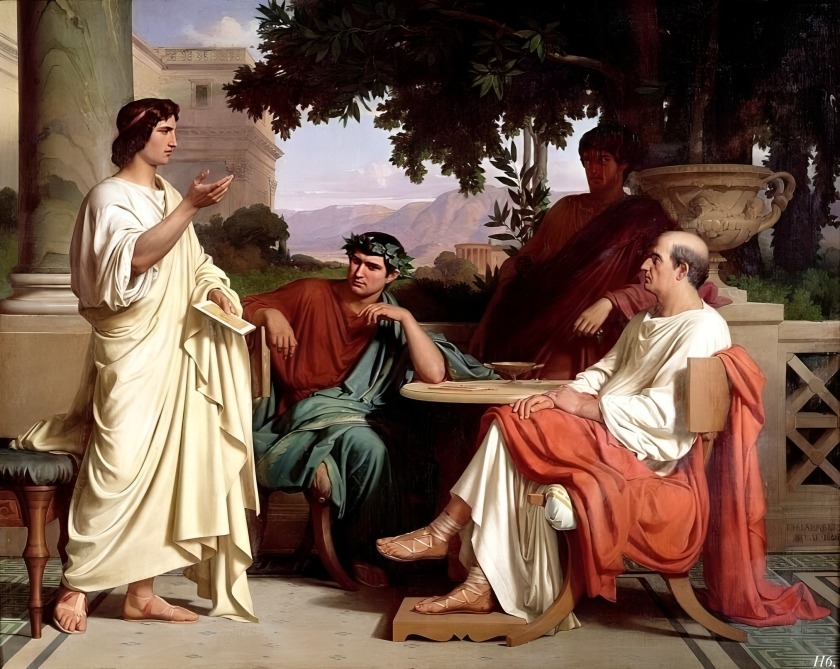
Ancient Rome was one of the most complex and populous civilizations of the ancient world, stretching from the dusty markets of Syria to the damp shores of Britannia. At the heart of this empire was a deeply stratified society built on conquest, commerce, and class. But when it comes to sheer numbers, one question continues to spark historical debate: Were there more free people or slaves in Ancient Rome?
To understand the answer, we have to dive into the structure of Roman society, the role of slavery, and the population estimates from the Republic to the peak of the Empire.
Roman Society Was Not a Simple Pyramid
First, it’s important to understand that Roman society wasn’t just made up of two groups—free and enslaved. There were layers:
- Senators and equestrians: The elite ruling and wealthy classes.
- Plebeians: Freeborn Roman citizens with limited political power.
- Freedmen (liberti): Former slaves who were manumitted.
- Provincials: Non-citizen free people living in the far reaches of the empire.
- Slaves (servi): People with no legal rights, considered property.
So when we ask who was “more numerous,” we’re really talking about a world where identity and legal status could be fluid—but slavery was incredibly common, and deeply embedded in the economy.
Slavery Was Widespread—but Not Always the Majority
It’s easy to imagine Rome as a giant slave state—and in many ways, it was. Slavery fueled everything from agriculture to education. Wealthy households in Rome often had dozens of slaves: cooks, tutors, scribes, hairdressers, and cleaners. The rural estates—the latifundia—were run by hundreds of enslaved laborers.
Yet, even at the height of slavery, slaves likely did not outnumber free people across the entire empire. Historians estimate that:
- In the city of Rome itself, slaves may have made up 30–40% of the population during the late Republic (1st century BCE).
- Across the entire Roman Empire, estimates suggest slaves made up around 10–15% of the population on average.
- In some provinces, especially those recently conquered or sparsely populated, the percentage of slaves may have been even lower.
In other words: slavery was visible and vast, but not necessarily numerical majority—especially when compared to the millions of freeborn citizens, freedmen, and provincial peoples across the empire.
The Numbers Game: Population Estimates
Let’s talk about raw numbers. At the height of the Roman Empire (c. 1st–2nd century CE), population estimates place the total number of people within the empire between 50 and 70 million.
- Of that, roughly 5 to 10 million are estimated to have been slaves.
- That leaves 40–60 million free individuals, including citizens, freedmen, women, children, and provincial non-citizens.
The numbers may vary depending on the region and period, but the general consensus is clear:
Free people outnumbered slaves throughout most of Roman history.
Still, Slaves Were Everywhere
Even if they weren’t the majority, slaves were in every aspect of Roman life. They worked the fields, staffed the imperial household, entertained in amphitheaters, and taught the children of senators. Some were chained in mines; others handled money, poetry, or law.
Rome’s economy was heavily dependent on enslaved labor, and manumission (freeing of slaves) was common—meaning the freedman population also grew over time. Many freedmen became wealthy and influential, blurring the lines between classes even further.
Conclusion
So, were slaves more numerous than free people in Ancient Rome? No—not across the empire. Free people always outnumbered slaves in the bigger picture. But in daily life, especially in Rome or on elite estates, slaves could seem to be everywhere—a living reminder of Rome’s conquests, economy, and contradictions.
And perhaps that’s the more important truth:
Slavery may not have defined the Roman population, but it defined the Roman world.
