
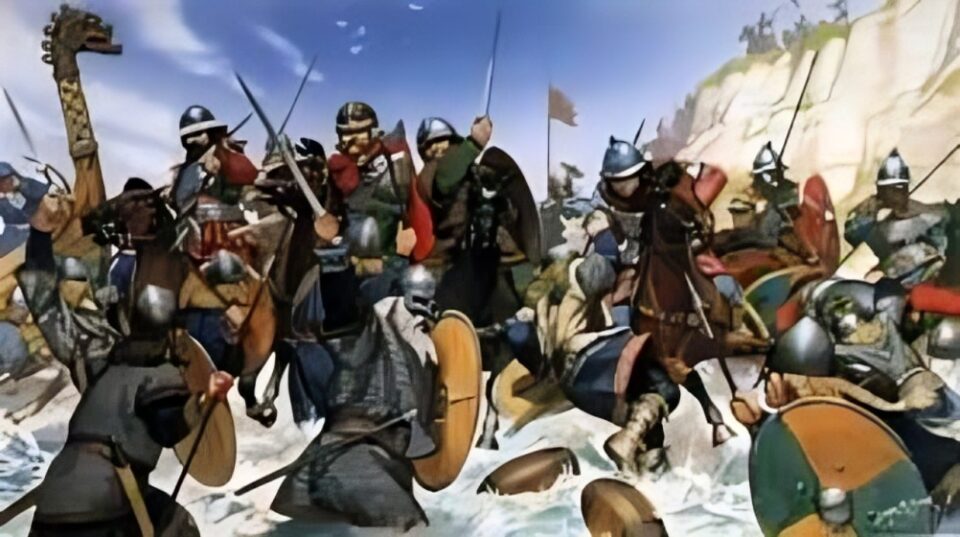
When we think of the Vikings, we often picture longships slicing through cold northern seas, raids on English monasteries, and Norse sagas filled with gods and warriors. But the Vikings’ reach stretched much further than Western Europe. They ventured east, along the great rivers of Russia, forging trade routes that connected the Baltic to the Black Sea and beyond. In the 10th century, this expansion brought them face-to-face with Arab travelers and chroniclers—encounters that left us with some of the most detailed outsider accounts of Viking life.
One of the most fascinating of these records comes from Ahmad ibn Fadlan, an Arab diplomat, traveler, and writer whose observations paint a vivid picture of the Norsemen, whom he encountered along the Volga River in 922 CE. His writings stand as one of the earliest and most remarkable Arabic encounters with the Vikings.
Ibn Fadlan and His Mission
Ibn Fadlan was sent from Baghdad as part of a diplomatic mission to the king of the Volga Bulgars. His task was to provide religious guidance, help with the construction of a mosque, and strengthen political ties. What he did not expect was to encounter a group of tall, fierce-looking traders from the north—known in Arabic sources as the Rus.
These “Rus” were Scandinavian Vikings who traveled eastward through Russia, trading furs, slaves, honey, and weapons for silver, silk, and luxury goods from the Islamic world. Their presence along the Volga made a lasting impression on Ibn Fadlan.
The First Impressions: The Viking Appearance
Ibn Fadlan was struck by the physical appearance of the Vikings. He described them as tall like palm trees, blond, and heavily tattooed from head to toe with dark green patterns. This detail stands out, as it differs from many European descriptions of the Norse. To Ibn Fadlan, they were exotic and intimidating, unlike any people he had seen before.
He also noted their cleanliness rituals—bathing daily, which was unusual in many parts of Europe at the time, though he criticized their communal way of washing, where everyone shared the same bowl of water. This mix of admiration and disapproval runs throughout his account.
The Viking Way of Life: Trade and Brutality
The Rus Vikings Ibn Fadlan met were primarily merchants. They brought furs, swords, and slaves to exchange for silver coins minted in the Islamic world. In fact, archaeologists have discovered vast hoards of Arabic silver dirhams in Viking graves, proof of how deeply connected these worlds were through trade.
Yet Ibn Fadlan also recorded aspects of Viking society that shocked him. He described their rough manners, their heavy drinking, and their treatment of slaves. He seemed both fascinated and horrified by their customs, especially those surrounding death.
The Famous Funeral Account
One of the most remarkable parts of Ibn Fadlan’s writings is his eyewitness description of a Viking chieftain’s funeral. Unlike a simple burial, this ceremony was a dramatic ritual that revealed much about Viking beliefs.
He described how the dead leader’s body was placed in a ship, surrounded by weapons, goods, and even sacrificed animals. But most shocking was the human sacrifice: a slave girl volunteered (or was compelled) to accompany the dead man into the afterlife. She was ritually killed during the funeral and placed beside him in the ship before it was set ablaze.
This vivid account remains one of the most detailed descriptions of a Viking funeral anywhere in history—and it comes not from a Norse saga, but from an Arab traveler’s pen.
Cultural Contrast and Curiosity
What makes Ibn Fadlan’s encounter so striking is the cultural contrast it reveals. As a Muslim scholar from the heart of the Abbasid Caliphate, Ibn Fadlan came from one of the most advanced civilizations of the age, with grand cities, libraries, and religious institutions. To him, the Vikings appeared both barbaric and fascinating—clean in some ways, filthy in others; fearless, yet reckless; wealthy, yet crude in behavior.
This encounter was not simply one of trade, but also of cultural exchange. Through his writing, we glimpse how different worlds viewed each other across vast distances—Arab sophistication meeting Norse ferocity.
Why This Encounter Matters
Ibn Fadlan’s observations remind us that history is not just about isolated cultures, but about connections across continents. The Vikings were not only raiders of the West; they were also traders, explorers, and cultural intermediaries linking Europe with the Islamic world.
His account has also inspired modern retellings. Michael Crichton’s novel Eaters of the Dead and the film The 13th Warrior are both loosely based on Ibn Fadlan’s writings, showing how powerful his testimony remains today.
Conclusion
The early Arabic encounter with the Vikings reveals more than just colorful details about Norse tattoos, rituals, and funerals. It shows how interconnected the medieval world truly was—Baghdad, Scandinavia, and Russia were all linked through rivers, trade, and curiosity. Ibn Fadlan’s journey reminds us that even in the 10th century, civilizations were not isolated, but constantly meeting, clashing, and learning from one another.
For us today, his words offer a window into a dramatic cultural crossroads—where the refined scholar of the Abbasid Caliphate stood face-to-face with the wild merchants of the North. It is a reminder that history’s richest stories often emerge when worlds collide.
Would you like me to also add some archaeological evidence (like silver dirham hoards, Viking graves in Russia, etc.) to give this a more historical-research feel?
