
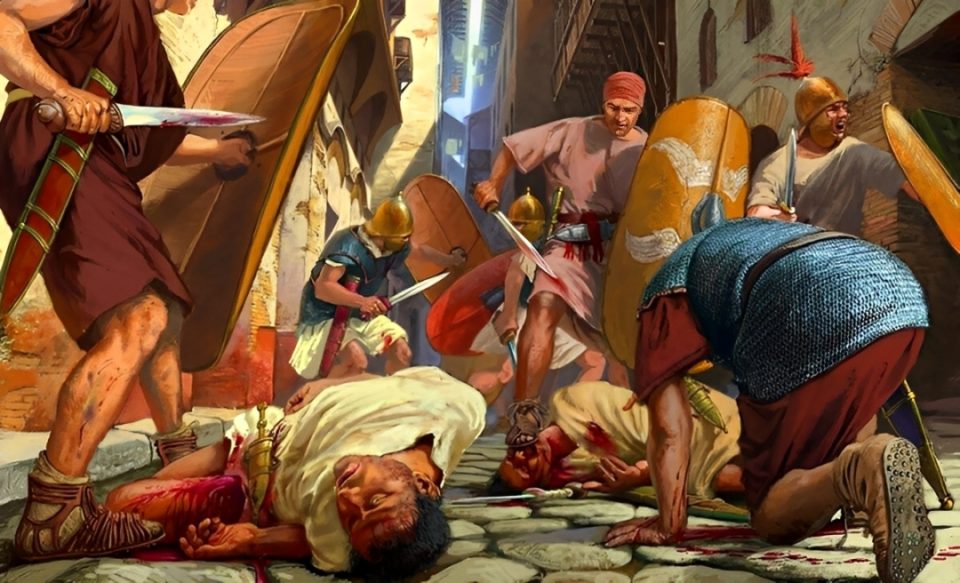
The story of Spartacus, the gladiator who led a massive slave rebellion against the Roman Republic, is one of history’s most remarkable tales of defiance and resilience. Despite being vastly outnumbered and lacking formal military training, his army of slaves and fugitive gladiators repeatedly defeated Rome’s highly trained legions. How did an unprofessional force manage to rout one of the most formidable military powers of the ancient world? The answer lies in a combination of factors, including strategic brilliance, Rome’s initial underestimation of the rebellion, and the unique strengths of Spartacus’s forces.
The Origins of Spartacus’s Rebellion
Spartacus, a Thracian by birth, was enslaved and trained as a gladiator in Capua. In 73 BCE, he and a small group of fellow gladiators orchestrated a daring escape, seizing weapons and fleeing into the countryside. Initially a small band of fugitives, their numbers swelled as thousands of enslaved people and discontented peasants joined their cause. Within months, Spartacus had assembled an army numbering in the tens of thousands.
Rome’s Underestimation and Tactical Mistakes
At the beginning of the rebellion, Roman authorities failed to recognize the threat posed by Spartacus. They viewed the uprising as little more than a localized disturbance rather than a full-fledged war. As a result, they initially sent small, poorly coordinated militias rather than seasoned legions to suppress the rebellion. These early Roman forces were ill-equipped to handle the guerrilla-style tactics employed by Spartacus and his men.
Spartacus capitalized on this complacency, using superior mobility and battlefield ingenuity to overcome better-equipped Roman troops. His forces utilized surprise attacks, ambushes, and rapid movements to keep their opponents off balance. Time and again, they were able to outmaneuver and overwhelm the Roman militias.
Guerrilla Warfare and Adaptability
One of Spartacus’s greatest advantages was his army’s ability to adapt. Unlike the Roman legions, which relied on strict formations and standardized tactics, Spartacus’s forces were flexible and unpredictable. They made use of the rugged terrain to their advantage, launching surprise raids and retreating before the enemy could mount an effective counterattack.
Spartacus also showed a keen understanding of logistics. His army moved swiftly and efficiently, avoiding prolonged engagements that could have led to supply shortages. Instead of relying on conventional supply lines, they lived off the land, taking what they needed from Roman towns and estates.
Leadership and Morale
Spartacus proved to be a charismatic and inspiring leader, capable of maintaining unity among a diverse and often unruly army. Unlike Rome’s rigid command structure, Spartacus led by example, fighting alongside his men and sharing in their hardships. This fostered loyalty and high morale among his troops, giving them the motivation to keep fighting even in the face of overwhelming odds.
By contrast, many Roman commanders sent to quell the rebellion lacked experience or underappreciated the difficulty of the task. Some, like Publius Varinius and Claudius Glaber, suffered humiliating defeats due to their overconfidence and poor leadership.
Strategic Missteps and Rome’s Response
Despite their early successes, Spartacus and his army ultimately faced insurmountable odds. As Rome began to take the rebellion more seriously, it dispatched larger, better-trained legions under the command of skilled generals such as Marcus Licinius Crassus. Unlike his predecessors, Crassus understood the nature of the threat and took a methodical approach to defeating Spartacus.
Crassus implemented harsher discipline within his ranks, even resorting to decimation—a brutal practice in which one-tenth of a unit was executed to instill fear and obedience. He also constructed massive fortifications to cut off Spartacus’s movements, effectively trapping his forces in southern Italy.
The Final Battle and Legacy
After a series of skirmishes and retreats, Spartacus’s army was finally cornered in 71 BCE. The decisive battle saw his forces overwhelmed by Crassus’s legions. Spartacus himself is believed to have died in combat, though his body was never definitively identified. In the aftermath, thousands of captured rebels were crucified along the Appian Way as a warning to future dissenters.
Despite their ultimate defeat, Spartacus and his army left a lasting legacy. Their ability to challenge Rome’s military dominance, even if only temporarily, exposed vulnerabilities within the Republic’s system. The rebellion also served as a stark reminder of the brutal conditions faced by enslaved people and the potential for mass uprisings.
Conclusion
Spartacus’s army defied expectations by repeatedly defeating Roman legions, thanks to superior mobility, strategic ingenuity, and strong leadership. Rome’s early complacency, coupled with Spartacus’s effective use of guerrilla tactics, allowed an untrained force to rout professional soldiers. Though ultimately crushed, the rebellion remains a testament to the power of resilience and the enduring fight for freedom.
