
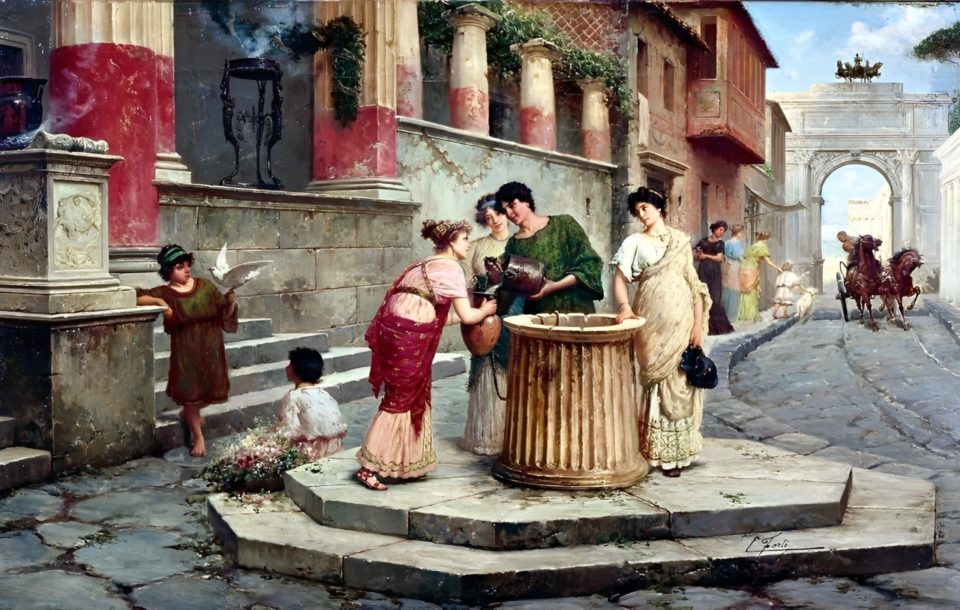
In ancient Rome, beauty standards were a reflection of the cultural, social, and political values of the time. The ideal of female beauty was deeply intertwined with the Roman Empire’s emphasis on social status, fertility, and moral virtues. While modern standards of beauty often emphasize individual expression, ancient Roman ideals were more rigid, with specific traits that were universally admired.
Physical Appearance
The physical attributes that were considered beautiful in ancient Rome were influenced by both Greek ideals and Roman values. The ideal Roman woman was expected to embody a combination of physical perfection and moral virtues, which were often seen as interconnected.
Fair Skin: Fair, pale skin was highly prized in Roman society. It was a symbol of wealth and status, as it indicated that a woman did not have to labor outdoors under the sun. Women of the upper class often went to great lengths to maintain their pale complexion, using lead-based cosmetics or chalk to whiten their skin. This desire for fair skin was also linked to the Roman association of beauty with youth and purity.
Youthful Appearance: Youth was highly valued in Roman society, particularly in women. The ideal Roman woman was often depicted as young, with smooth, wrinkle-free skin. Youthfulness was associated with fertility, a key aspect of the ideal Roman woman, as childbearing was a significant duty. To maintain a youthful appearance, women used various cosmetics and treatments, such as oils and lotions, to keep their skin soft and supple.
Soft Curves and Proportions: Unlike the more athletic build admired by the Greeks, Romans favored softer, fuller figures in women. A well-proportioned body with gentle curves was seen as a sign of fertility and health. The ideal Roman woman was neither too thin nor too heavy but had a balanced, harmonious figure that suggested the ability to bear children.
Long, Thick Hair: Hair was an important aspect of female beauty in ancient Rome. Long, thick hair was highly desirable, and elaborate hairstyles were a symbol of status and femininity. Women often curled their hair or wore wigs made of real hair to achieve the desired volume and length. Blonde hair was particularly prized, and Roman women sometimes used dyes or wore wigs made from the hair of Germanic slaves to achieve the look.
Cultural and Moral Ideals
The ideal of beauty in ancient Rome was not solely based on physical appearance; it was also deeply connected to a woman’s character and moral virtues. A beautiful woman was expected to embody the values of modesty, chastity, and loyalty, which were central to Roman society.
Modesty and Virtue: Modesty was a key virtue for Roman women, and it was reflected in both their appearance and behavior. Women were expected to dress modestly, covering their bodies with flowing garments like the stola, a traditional Roman dress worn by married women. Modesty was also expressed through subdued makeup and jewelry, as overly flashy adornments were frowned upon. The ideal Roman woman was seen as modest, virtuous, and devoted to her family.
Chastity and Fertility: Chastity was another important aspect of the ideal Roman woman. Women were expected to remain chaste until marriage and to be faithful to their husbands afterward. This emphasis on chastity was linked to the importance of family lineage and inheritance in Roman society. A woman’s beauty was often associated with her ability to bear children and ensure the continuation of her husband’s family line.
Dignity and Grace: The ideal Roman woman was also expected to possess a sense of dignity and grace. This was reflected in her posture, movements, and speech. Women were encouraged to carry themselves with poise and to speak softly and modestly. These qualities were seen as an extension of a woman’s beauty, as they demonstrated her refinement and adherence to societal norms.
The Role of Art and Literature
Art and literature played a significant role in shaping and perpetuating the ideals of female beauty in ancient Rome. Roman poets and writers often described the physical and moral attributes of beautiful women in their works, creating a lasting image of the ideal Roman woman.
Poetry and Descriptions: Poets like Ovid and Catullus frequently wrote about the beauty of women, emphasizing features such as fair skin, soft hair, and delicate features. These descriptions helped to cement the ideal of beauty in the collective Roman imagination and influenced how women were perceived and judged.
Statues and Sculptures: Roman statues and sculptures often depicted women according to the ideal standards of beauty. These works of art served as both representations of real women and as aspirational images of the perfect female form. The emphasis on youthful, serene expressions and well-proportioned bodies in these sculptures reinforced the cultural ideals of beauty.
Conclusion
The ideal of female beauty in ancient Rome was a complex interplay of physical appearance, cultural values, and moral virtues. While the emphasis on fair skin, youthful features, and modesty may seem distant from modern beauty standards, these ideals offer a fascinating glimpse into the values and priorities of ancient Roman society. Beauty in ancient Rome was not just about appearance; it was also about embodying the virtues that were most highly regarded in a woman, making it a reflection of the broader social and cultural landscape of the time.
