
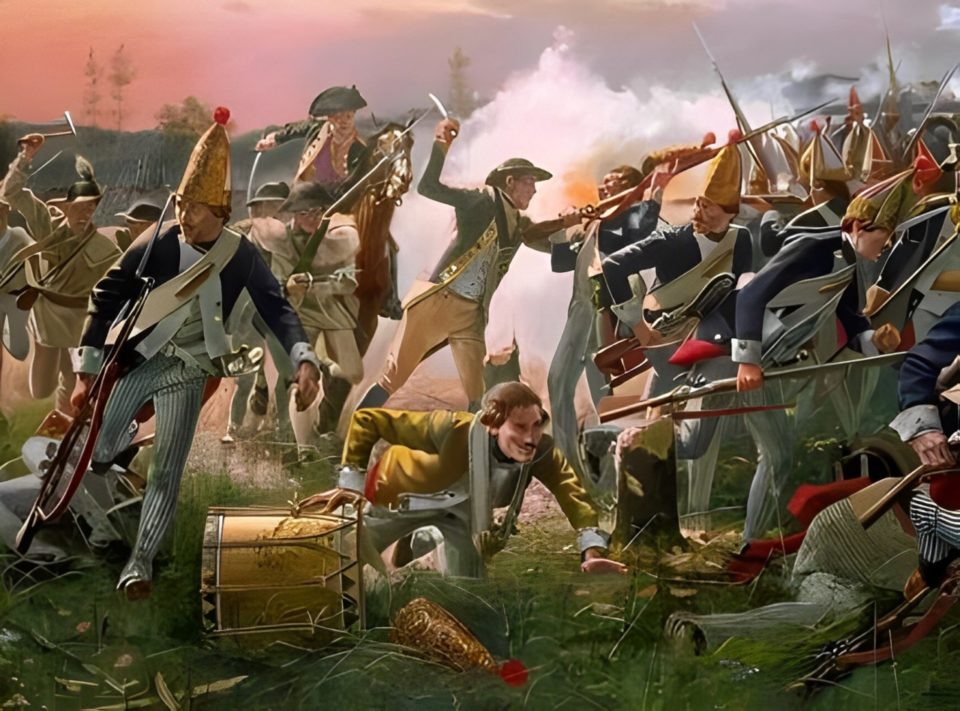
Throughout human history, wars have shaped the course of nations, cultures, and civilizations. While some conflicts are brief, others last for years, decades, or even centuries. But when it comes to the question of the longest war in history, a few stand out as remarkably prolonged. Here’s a look at some of the contenders and the war that holds the title.
The Longest War: The Reconquista (711–1492)
The Reconquista, a series of conflicts between Christian kingdoms and Muslim states on the Iberian Peninsula, is widely considered the longest war in history. Spanning an incredible 781 years, this protracted struggle began in 711 when Muslim forces, known as the Moors, invaded Spain and Portugal. Over centuries, Christian kingdoms like Castile, Aragon, and León slowly reclaimed territories from the Moors.
The final chapter of the Reconquista came in 1492 when Ferdinand II of Aragon and Isabella I of Castile captured the last Muslim stronghold, the city of Granada. This victory not only ended Muslim rule in Spain but also marked the consolidation of Spain as a unified Christian kingdom. Interestingly, the same year also saw Christopher Columbus setting sail for the New World, a pivotal moment in global history.
Other Long Wars in History
While the Reconquista holds the title for the longest continuous conflict, other prolonged wars are worth mentioning:
The Anglo-French Hundred Years’ War (1337–1453)
Despite its name, this conflict between England and France lasted 116 years. It was a series of battles, truces, and peace treaties fought over control of the French throne. The war ended with the French victory at the Battle of Castillon and England losing almost all its French territories.
The Dutch War of Independence (1568–1648)
Also known as the Eighty Years’ War, this was a struggle by the Dutch provinces to break free from Spanish rule. The war resulted in the formal recognition of the Dutch Republic in 1648 with the Treaty of Westphalia.
The Roman-Persian Wars (54 BC – AD 628)
The series of wars between the Roman (and later Byzantine) Empire and the Persian Empires spanned over 600 years. The two great powers of the ancient world engaged in intermittent conflict for dominance in the Near East and the Middle East.
Why Did These Wars Last So Long?
Prolonged wars often result from a combination of factors such as deeply rooted territorial, religious, or political conflicts. The Reconquista, for example, was driven by religious and cultural differences between Christians and Muslims, with both sides vying for control of Spain and Portugal. Geography also played a role, as the Iberian Peninsula’s rugged terrain made military campaigns slow and arduous.
In the case of the Hundred Years’ War, dynastic disputes over the French crown created a volatile political landscape, while the Dutch War of Independence was fueled by nationalistic fervor and religious conflicts between Protestant and Catholic factions.
Conclusion
Long-lasting wars, like the Reconquista, often leave lasting imprints on nations and cultures. They shape borders, influence national identities, and change the course of history. The Reconquista, for instance, played a pivotal role in shaping the Spanish nation and the history of Europe. These extended conflicts are reminders of the complexities of human societies and the enduring nature of certain struggles.
While we hope for peaceful resolutions to modern conflicts, studying these prolonged wars reminds us of the resilience and tenacity of civilizations in the face of long-term adversity.
