
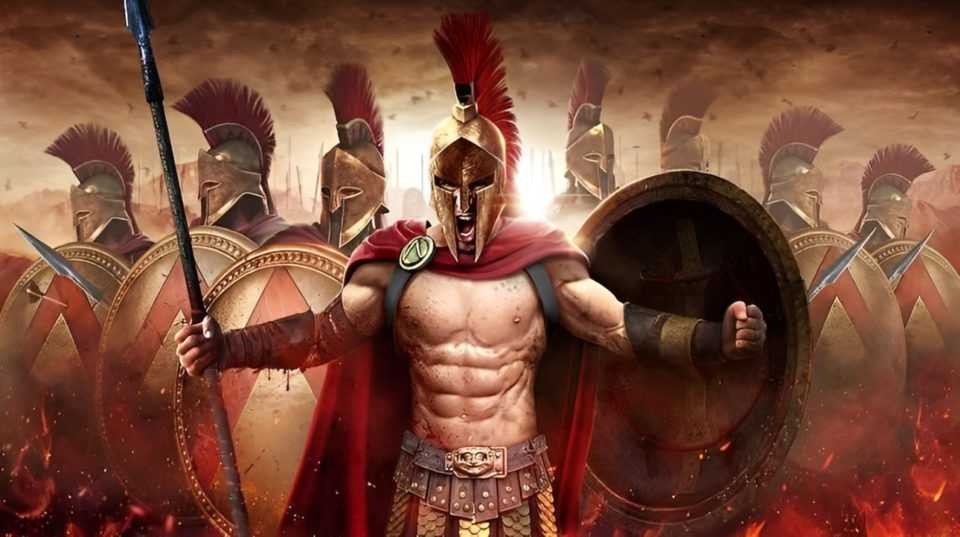
The history of Ancient Greece is a tale of triumphs and tragedies. On one hand, the Greeks famously repelled the mighty Persian Empire during the Persian Wars, showcasing their military ingenuity and fierce independence. On the other hand, centuries later, Greece succumbed to Roman dominance. This seeming paradox—resisting one superpower but falling to another—offers fascinating insights into the geopolitical, cultural, and military dynamics of the ancient world.
How Greece Defied the Persian Empire
The Greek resistance to Persia in the 5th century BCE remains one of the most celebrated episodes in history. The Persian Empire, under rulers like Darius I and Xerxes I, sought to subjugate the Greek city-states. Despite being vastly outnumbered, the Greeks managed to achieve remarkable victories in battles such as Marathon (490 BCE), Thermopylae (480 BCE), and Salamis (480 BCE).
Key Factors Behind Their Success:
Unity in Crisis
While Greek city-states were notoriously independent and often at odds, the Persian threat united them temporarily. Key players like Athens and Sparta put aside their rivalries to face a common enemy, leveraging their complementary strengths—Athens’ naval power and Sparta’s land-based military might.
Geography
Greece’s mountainous terrain and narrow coastal passes, like Thermopylae, gave the Greeks a tactical advantage. They used the landscape to neutralize Persia’s numerical superiority.
Superior Tactics and Innovation
Greek military strategies, such as the phalanx formation, and their advanced naval maneuvers during battles like Salamis, proved highly effective.
Cultural Motivation
The Greeks fought to defend their way of life, which emphasized freedom and self-governance. This ideological commitment gave them a psychological edge over the Persian forces, many of whom were conscripts.
Why Greece Fell to Rome
Fast forward to the 2nd century BCE, and the Greek city-states were no longer the dominant force they once were. Instead, they fell under Roman control, culminating in the Roman conquest of Corinth in 146 BCE.
Key Reasons for Their Defeat:
Internal Divisions
By the time Rome rose to power, the unity that had helped Greece resist Persia was long gone. Rivalries between city-states, such as Athens, Sparta, and Thebes, weakened the collective strength of Greece. The Peloponnesian War (431–404 BCE), a destructive conflict between Athens and Sparta, had left the Greek world fragmented and vulnerable.
Economic Decline
Prolonged wars and internal strife drained the Greek city-states economically. A weakened economy made it harder for them to maintain strong armies or resist external threats effectively.
Rome’s Superior Military and Strategy
Rome’s disciplined legions and strategic diplomacy outclassed the fragmented Greek forces. The Romans often exploited Greek divisions, allying with some city-states while defeating others.
Cultural Assimilation
Unlike the Persians, the Romans admired Greek culture and adopted much of it, including art, philosophy, and religion. This cultural reverence softened Greek resistance, as many Greeks saw Roman rule as less of an imposition and more of a continuation of their legacy.
Macedonian Weakness
After Alexander the Great’s death, his empire fragmented, and the Hellenistic kingdoms (such as Macedon, Ptolemaic Egypt, and the Seleucid Empire) often fought each other rather than uniting against Rome. The Roman Republic capitalized on this disunity, gradually annexing these territories.
The Contrast: Persia vs. Rome
The Persian Empire sought to impose its rule over Greece while maintaining a distinct cultural and political identity. In contrast, Rome integrated Greek culture into its own, making the transition to Roman rule less jarring. This key difference explains why the fiercely independent Greeks resisted Persian domination but eventually acquiesced to Roman governance.
Conclusion
The story of Ancient Greece’s resistance to Persia and its eventual fall to Rome is a testament to the complexities of history. Greece’s defiance against Persia showcased its resilience and unity in the face of existential threats. Its fall to Rome, on the other hand, reflected the consequences of internal divisions and the inevitability of larger geopolitical shifts.
Ultimately, Greece’s cultural influence endured, shaping the Roman Empire and, through it, the foundations of Western civilization. Even in defeat, the legacy of Ancient Greece remains one of the most enduring in human history.
