
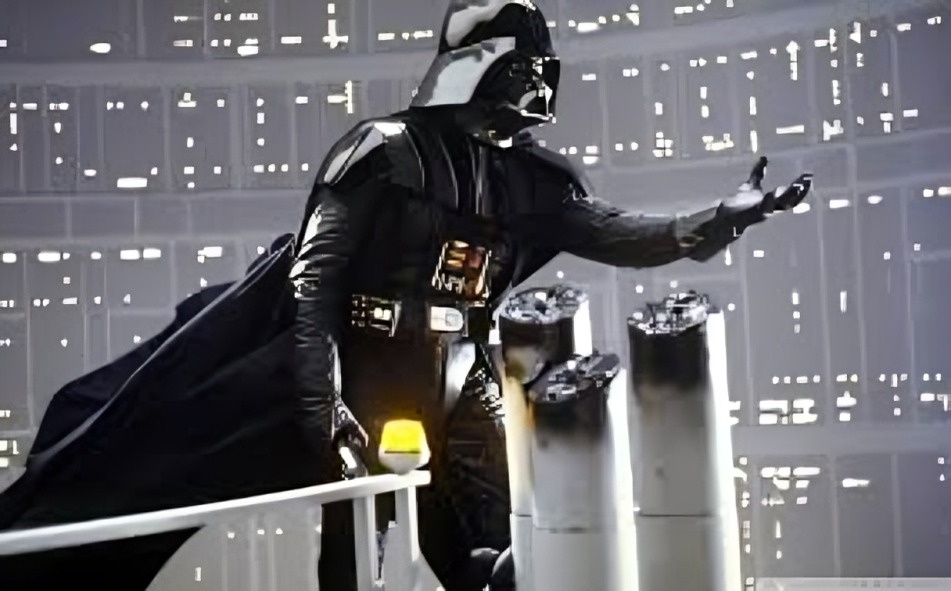
Movie quotes stick with us. They become catchphrases, memes, and cultural shorthand. But here’s the funny thing: many of the lines we love the most weren’t actually said the way we think they were. Over time, words get tweaked, shortened, or completely changed—and those altered versions become more famous than the originals.
Here are 11 of the most misquoted movie lines of all time. See how many you’ve been repeating wrong.
The Empire Strikes Back (1980)
Misquote: “Luke, I am your father.”
Actual line: “No, I am your father.”
This is probably the most famous misquote in cinema history. Darth Vader never says Luke’s name. The real line is even more chilling in its directness.
Casablanca (1942)
Misquote: “Play it again, Sam.”
Actual line: “Play it, Sam. Play ‘As Time Goes By.’”
Humphrey Bogart never utters the iconic misquoted line. The closest is Ingrid Bergman’s plea to hear the song that reminds her of love lost.
Snow White and the Seven Dwarfs (1937)
Misquote: “Mirror, mirror on the wall, who is the fairest of them all?”
Actual line: “Magic mirror on the wall, who is the fairest one of all?”
Disney fans everywhere have been quoting the wrong version for decades.
Apollo 13 (1995)
Misquote: “Houston, we have a problem.”
Actual line: “Houston, we’ve had a problem.”
Tom Hanks’ delivery is so iconic that it replaced the original phrasing spoken during the real Apollo 13 mission.
Field of Dreams (1989)
Misquote: “If you build it, they will come.”
Actual line: “If you build it, he will come.”
The line refers specifically to Kevin Costner’s character’s father, not the masses. But the misquote has taken on a life of its own.
Silence of the Lambs (1991)
Misquote: “Hello, Clarice.”
Actual line: “Good morning.”
Hannibal Lecter’s greeting has been cemented in pop culture, but he never actually says the oft-quoted line.
The Graduate (1967)
Misquote: “Mrs. Robinson, are you trying to seduce me?”
Actual line: “Mrs. Robinson, you’re trying to seduce me. Aren’t you?”
A subtle difference, but the shift from a statement to a question is what most people remember.
The Wizard of Oz (1939)
Misquote: “Toto, I don’t think we’re in Kansas anymore.”
Actual line: “Toto, I’ve a feeling we’re not in Kansas anymore.”
The real line has a bit more uncertainty—fitting for Dorothy’s wonder at the magical world of Oz.
Jaws (1975)
Misquote: “We’re gonna need a bigger boat.”
Actual line: “You’re gonna need a bigger boat.”
Chief Brody delivers the line, but he’s actually talking to Quint. Fans have since turned it into the collective “we.”
Frankenstein (1931)
Misquote: “He’s alive!”
Actual line: “It’s alive! It’s alive!”
Dr. Frankenstein’s manic joy is often remembered as shouting about “he,” but the real line captures the horror of the moment.
Tarzan the Ape Man (1932)
Misquote: “Me Tarzan, you Jane.”
Actual line: That exact line never appears.
This one is pure invention—summed up from Tarzan’s broken speech style in various adaptations, but never actually spoken in the original film.
Conclusion
Misquotes spread because they’re catchy, simple, and easy to repeat. They become part of pop culture even if they’re not technically accurate. The next time you drop a famous movie line, pause and ask yourself: am I quoting the film—or the legend that grew around it?
Would you like me to make this into a quiz-style version (so readers can guess first before seeing the real answer), or keep it as this straightforward list format?
