
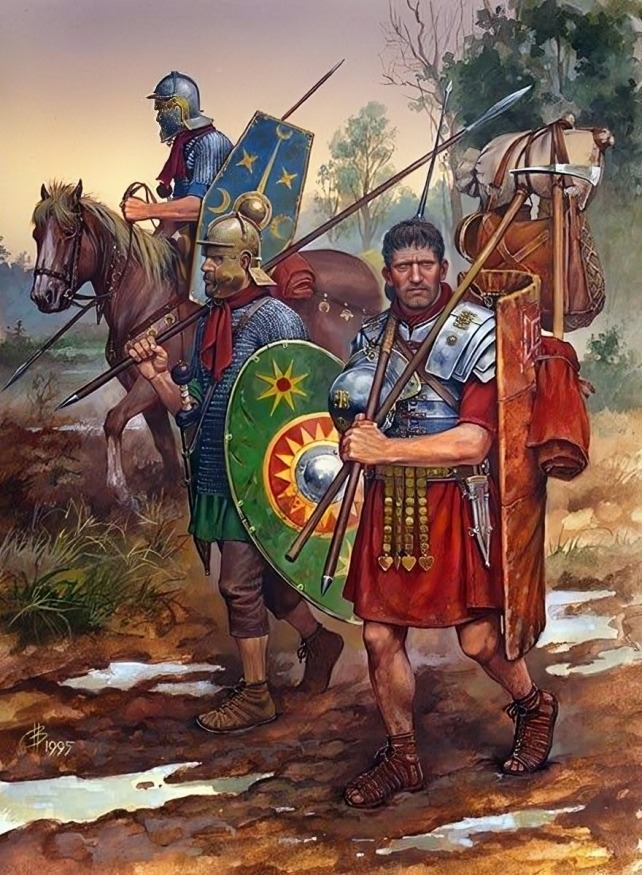
In the vast tapestry of ancient Roman history, filled with emperors, generals, and philosophers, few men stand out quite like Marcus Licinius Crassus—a man whose wealth was so immense, he could do something even the state sometimes couldn’t: fund his own army.
He wasn’t born into ultimate power. He wasn’t the most noble, the most admired, or the most loved. But he was, without question, the richest man in Roman history—and that money made him one of the most dangerous, ambitious, and fascinating figures of the ancient world.
Here’s how Crassus used his fortune to fuel power, command legions, and almost rival Caesar himself.
The Origin of Crassus’ Wealth
Crassus was born into a prominent family, but it wasn’t noble blood that made him rich—it was opportunity, strategy, and ruthless capitalism.
After the chaos of Rome’s civil wars, the city was filled with burned buildings and seized properties. Crassus saw potential in the ruins. He bought up properties at bargain prices, often from people who had been executed or exiled, and flipped them for profit.
He also ran a private fire brigade. When fires broke out in the city (a common occurrence in ancient Rome), Crassus’ men would rush to the scene—but not to put out the fire. First, Crassus would negotiate to buy the burning property for cheap. Only then would his brigade step in to extinguish the flames.
Shady? Absolutely. Genius? Also yes.
The Man Who Could Buy an Army
Crassus’ wealth ballooned to what some ancient sources estimated as 200 million sesterces or more—the rough equivalent of billions today.
But Crassus didn’t just collect wealth. He used it to gain power, influence, and favor. And when Rome faced one of its greatest internal threats—the Spartacus slave revolt—Crassus did what few men could: he personally funded, trained, and led his own army.
The Roman Senate, humiliated by earlier failures to stop the rebellion, finally gave Crassus supreme command. With his privately funded forces, he crushed the uprising, crucifying thousands of rebels along the Appian Way as a brutal warning.
For Crassus, the victory wasn’t just military—it was political. It restored Rome’s pride and launched his career to new heights.
Wealth, Power, and Jealousy
Crassus was part of the famous First Triumvirate, alongside Julius Caesar and Pompey the Great. But while Caesar had charisma and Pompey had military glory, Crassus had money—and lots of it.
Yet, he craved more. In 53 BCE, desperate to achieve military fame like his partners, Crassus led a disastrous campaign in the East against the Parthian Empire. It ended in the Battle of Carrhae, one of the worst defeats in Roman history. Crassus was killed, and according to legend, the Parthians poured molten gold down his throat—a mocking tribute to his insatiable hunger for wealth.
Legacy of a Man Who Bought Power
Crassus’ life reads like a cautionary tale and a masterclass in ambition. He was a businessman, general, politician, and empire-builder—all rolled into one. He used his money not just to live lavishly, but to shape the course of Roman politics and history itself.
In a world where military might and noble birth defined power, Crassus proved that money could buy you both—up to a point.
Conclusion
Marcus Licinius Crassus wasn’t just Rome’s richest man—he was its ultimate example of wealth as a weapon. He bought land, loyalty, armies, and influence. But he couldn’t buy the one thing he wanted most: the eternal glory of a military legacy.
In trying to match Caesar and Pompey, Crassus lost more than gold. He lost his life, and with it, the empire he might have helped shape.
Still, his legacy remains a towering reminder of what money can buy—and what it never truly can.Would you like a companion article on “How Caesar Used Debt to Seize Power” or a deeper dive into Rome’s First Triumvirate?
