
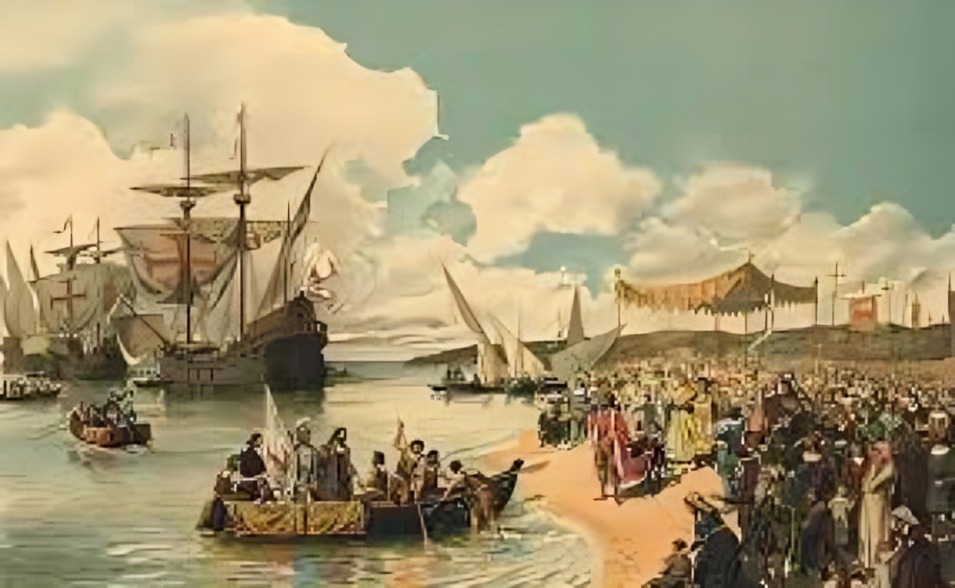
In the late 15th century, the world was on the brink of transformation. Kingdoms were competing for power, trade routes, and knowledge of the unknown seas. Among them, Portugal stood out—not because of its size, but because of its daring spirit. Led by visionary monarchs and fearless navigators, the Portuguese embarked on voyages that would forever alter global history. And perhaps the most world-changing of all came in 1498, when Vasco da Gama reached the shores of India.
The Voyage That Changed Everything
The journey began in 1497 under King Manuel I’s orders. Vasco da Gama and his fleet set sail from Lisbon, navigating around the treacherous Cape of Good Hope at Africa’s southern tip. It was a perilous route—long, uncertain, and filled with storms and scurvy—but their determination was unshakable. In May 1498, after nearly a year at sea, da Gama landed in Calicut (now Kozhikode, Kerala), marking the first direct sea route from Europe to India.
This wasn’t just a geographical achievement; it was the dawn of a new world order. For centuries, the spice trade had been controlled by Arab and Venetian merchants. Portugal’s discovery shattered that monopoly. By bypassing overland routes, they unlocked immense wealth and power for Europe—and reshaped the global economy forever.
The Birth of a Maritime Empire
After da Gama’s successful voyage, Portugal wasted no time. They established trading posts and fortresses across India’s coastline—Goa, Diu, and Cochin becoming symbols of Portuguese might. Goa, in particular, flourished as the capital of the Portuguese East, blending European architecture with Indian culture and religion.
But this expansion wasn’t peaceful. The Portuguese sought control over spice trade routes, often by force. They battled local rulers, Arab traders, and even other European powers that came later. Yet, for a time, they succeeded. The Indian Ocean—once dominated by Muslim merchants—became a Portuguese lake.
The Global Ripple Effect
The arrival of the Portuguese in India was the first true act of globalization. It connected continents, economies, and cultures in a way the world had never seen. Europe’s appetite for spices, silk, and precious stones exploded, fueling centuries of exploration and colonization.
Their presence also set off a domino effect. Other European nations—Spain, the Netherlands, England, and France—rushed to find their own routes to Asia and the New World. This race for trade and territory would define the next 400 years of world history, ushering in an age of empires, discovery, and, unfortunately, exploitation.
Cultural and Religious Crossroads
Beyond trade and conquest, the Portuguese brought with them Christianity, Western art, and architecture. Churches built in Goa still stand as testaments to this cultural fusion. Local cuisine, language, and traditions absorbed Portuguese influences—introducing new words, ingredients, and customs that persist today.
However, their rule was not without controversy. The zeal of missionaries and the rigid control of the Inquisition left scars on local communities. Yet, the cultural exchange they triggered gave rise to hybrid identities—Goan Catholics, Indo-Portuguese art, and Creole languages—that tell a deeper story of human adaptation and coexistence.
The Legacy Lives On
By the time Portugal’s power waned in the 17th century, their legacy was already permanent. They had redrawn maps, opened oceans, and redefined trade and diplomacy. Their arrival in India didn’t just enrich Portugal—it shifted the axis of world power toward Europe and set the stage for the modern global economy.
Today, the remnants of that era live on—in Goa’s colonial buildings, in Indian surnames like D’Souza and Fernandes, and even in the shared festivals and foods that blend East and West.
Conclusion
When Vasco da Gama’s ships anchored off Calicut’s coast, the world changed forever. The Portuguese didn’t just find a sea route—they found a connection between civilizations that reshaped humanity’s course. Their arrival in India ignited an era of exploration, exchange, and empire that transformed cultures, economies, and geopolitics across the globe.
From the spices of Kerala to the streets of Lisbon, the ripples of that journey are still felt today—a reminder that sometimes, a single voyage can rewrite the destiny of the entire world.
