
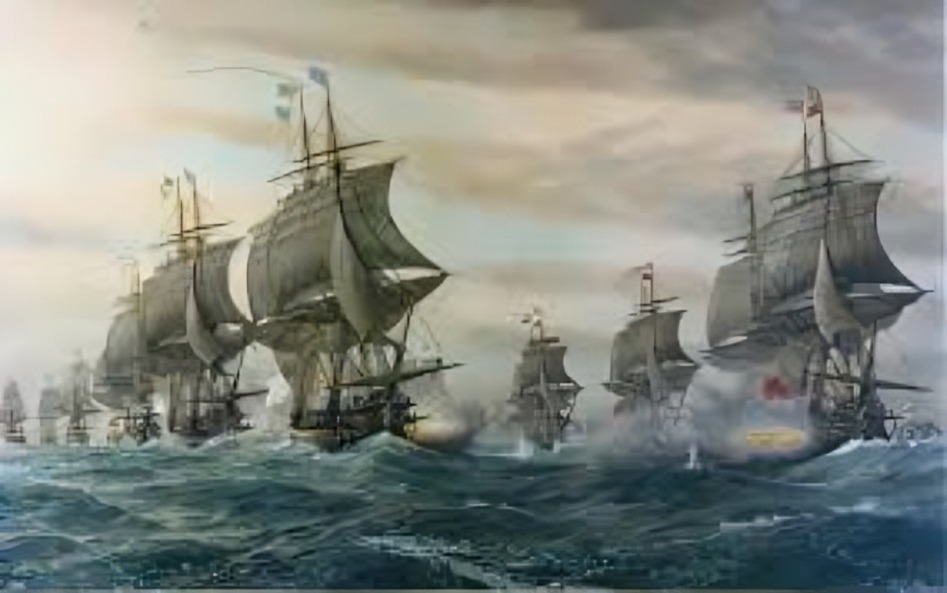
When people think about the American Revolution’s decisive moments, they picture Washington at Yorktown or the signing of the Treaty of Paris. Yet behind the scenes, a quiet naval clash determined the outcome of the entire war. The Battle of the Chesapeake, fought in 1781, is the forgotten victory that made American independence possible. Though often overshadowed by land campaigns, this naval encounter sealed Britain’s fate long before the final surrender.
A War at a Breaking Point
By mid-1781, the Revolutionary War had become a draining stalemate. The British still commanded the seas, controlled key ports, and believed they could suffocate American resistance. George Washington, desperate for a decisive breakthrough, saw only one opportunity left: trap British General Cornwallis in Virginia.
But this plan could work only if the French navy blocked British reinforcements. The entire destiny of the war suddenly depended on a fleet far from American soil.
Admiral de Grasse Arrives With a Bold Plan
French Admiral François de Grasse sailed into the Chesapeake Bay with 24 warships, a powerful fleet but one still intimidated by Britain’s naval reputation. If the British navy managed to break through, Cornwallis would escape or be reinforced—and the American dream of independence would collapse.
De Grasse took a position at the mouth of the bay, knowing that the next British move could decide the future of two nations.
The Battle That Was Quiet but Decisive
On September 5, 1781, the British fleet under Admiral Thomas Graves appeared off the Virginia Capes. What followed wasn’t the dramatic picture of naval warfare most people imagine. There were no ships sunk, no massive explosions, no daring boarding maneuvers.
Instead, it was a tactical battle—measured, disciplined, and precise.
The British formation fell into confusion, while the French line held firm. Though neither fleet suffered catastrophic losses, Graves realized he could not break through. As the sun set, the British withdrew, leaving de Grasse in control of the Chesapeake.
A quiet retreat—but a gigantic turning point.
Yorktown: The Direct Result of a Naval Victory
With the bay secured, Cornwallis was completely trapped at Yorktown. No reinforcements. No escape. No supply lines.
Washington and French General Rochambeau marched their troops south, confident the British could no longer intervene by sea. In October, Cornwallis surrendered, effectively ending the war.Yorktown is remembered as the final victory.But the Battle of the Chesapeake is the reason Yorktown happened at all.
Why This Battle Was Forgotten
The battle didn’t involve dramatic ship losses or legendary naval duels. It lacked the cinematic flair that usually etches events into public memory. Land battles always steal the spotlight, while strategic naval maneuvers remain invisible to most people.
Yet history is shaped not by spectacle but by outcomes. And the Chesapeake changed everything.
Conclusion
The Forgotten Naval Battle that won the American Revolution was not fought on American soil, nor did it involve famous heroes charging into danger. It was fought on the water, far from the drama of Yorktown, and yet it determined the future of a nation.
America may have declared its freedom on land—but it was protected, preserved, and ensured at sea.
