
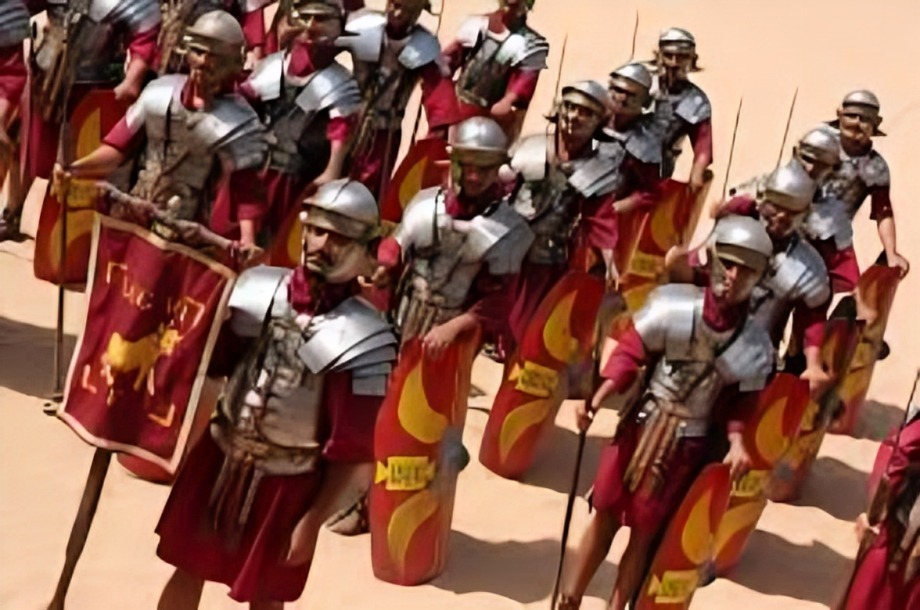
When we think of knights, we imagine armored men on horseback from medieval Europe — chivalry, banners, and the gleam of steel. But centuries before the first medieval knight ever took to the field, Rome had its own class of elite horsemen: the Equites, or Roman knights.
They were powerful, wealthy, and often the backbone of Rome’s military and political rise. Yet today, they’ve been largely forgotten — overshadowed by senators, emperors, and gladiators. These were the forgotten knights of ancient Rome — a class whose influence stretched from the battlefield to the heart of the empire.
From Horsemen to Power Brokers
In Rome’s earliest days, the Equites were literally knights — cavalrymen chosen from the city’s wealthiest citizens. Owning and maintaining a horse was expensive, so these men were both warriors and aristocrats.
Their title, Eques (plural Equites), comes from equus — Latin for horse. They formed the cavalry during the early Republic, charging into battle beside the legions, often acting as scouts, messengers, and shock troops.
But as Rome’s military evolved and the legions grew more dominant, the knights’ role shifted. By the late Republic, the Equites had become something else entirely — Rome’s financial and administrative elite.
The Rise of Rome’s “Second Order”
As senators gained political power, the knights carved out their own niche in the empire’s machinery. They became tax collectors, provincial governors, and military officers.
Julius Caesar, for instance, relied heavily on the Equites to administer his vast territories. Augustus — Rome’s first emperor — formally recognized them as the “Second Order” of Roman society, ranking just below senators but above common citizens.
They were the empire’s managers, the quiet professionals who kept the Roman world running while senators debated in marble halls.
Warriors of Status, Not Just Blood
Unlike senators, whose positions were based on ancestry, knights could rise through merit — or, more often, through wealth.
A citizen who owned property worth at least 400,000 sesterces could be admitted to the ordo equester — the knightly order. This made the Equites an early example of Rome’s meritocratic class: not entirely noble by birth, but powerful by means and ambition.
They commanded legions, governed provinces, and ran the empire’s trade routes. The Roman postal system, grain distribution, and even some elements of banking were managed by the Equites.
They were the empire’s middle ground — the professionals between the ruling elite and the working masses.
The Decline into Obscurity
By the third century AD, the Roman world was changing fast. The military became professionalized, the cavalry evolved into a specialized branch, and the distinctions between senatorial and equestrian ranks blurred.
Many knights became part of the imperial bureaucracy — powerful but faceless. Others were absorbed into the aristocracy or replaced by new classes of administrators as the empire split and declined.
Over time, the idea of a Roman “knight” faded from memory — replaced centuries later by the armored figures of medieval Europe, who borrowed much of their image and honor from the forgotten Equites of Rome.
Legacy of the Roman Knights
The Equites left behind no shining suits of armor or romantic tales of courtly love. But their legacy shaped the very foundations of Western civilization:
- The concept of merit-based service in government.
- The administrative efficiency that kept vast empires functioning.
- And the fusion of wealth and warfare that would later define medieval knighthood.
In many ways, the Roman knight was the blueprint for the noble warriors of later ages — a blend of status, discipline, and public service.
Conclusion
The Equites may not inspire legends like Caesar or gladiators, but they were the quiet force behind Rome’s greatness — the forgotten knights who rode not for glory, but for duty.They remind us that history isn’t just built by conquerors and kings, but by those who serve with loyalty, intellect, and silent strength.
Rome may have fallen, but the legacy of its knights — disciplined, adaptable, and quietly powerful — still rides through the centuries.
