
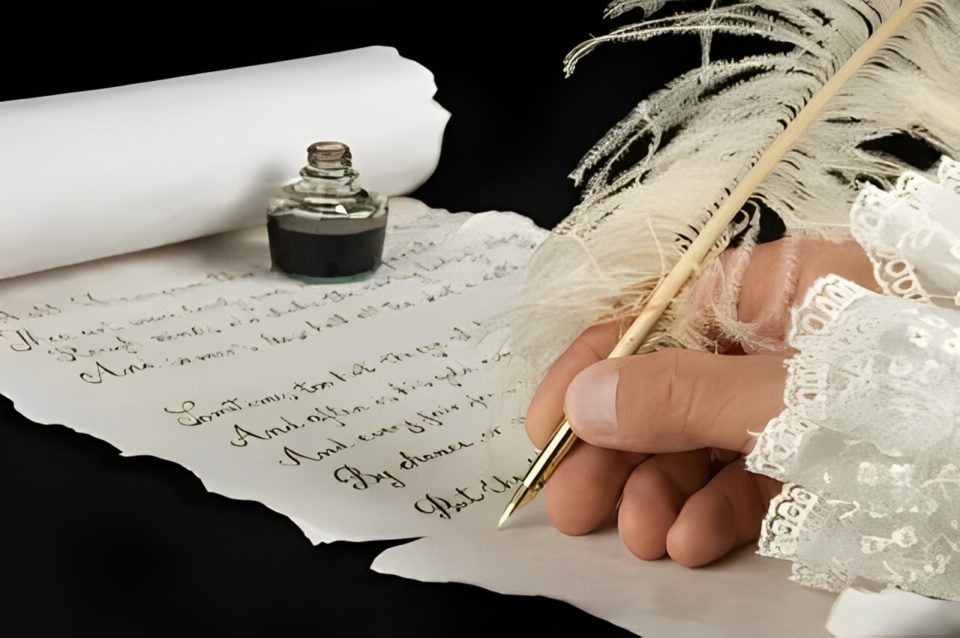
Throughout history, literature has been shaped by those who dared to share their thoughts, emotions, and perspectives. But what about those whose words remained in the shadows, their poems never read, their names never known? There exists a quiet world where creativity thrives in secrecy, where poetry is penned but never published, where emotions spill onto pages that remain untouched by others’ eyes. This is the tale of the secret writer—a poet whose words are crafted with passion yet remain unclaimed by the world.
The Silent Muse
For some, writing is an act of personal liberation, an outlet to express what cannot be spoken. The secret writer finds solace in the written word, but unlike celebrated poets, they do not seek recognition. Instead, they compose verses for the pure joy of creation, their poetry hidden in journals, tucked into books, or even scattered across scraps of paper. The reasons for secrecy vary—fear of judgment, lack of confidence, or simply the belief that their words belong only to themselves.
These anonymous poets weave emotions into their work, capturing love, sorrow, hope, and despair. Yet, they hesitate to share their craft, guarding their verses as if revealing them would strip them of their magic. Their poems, unclaimed and undiscovered, carry stories that may never be told.
A Life Written in Ink
One such secret writer, let’s call her Lillian, spent years composing poetry in the quiet of the night. Her notebooks held sonnets of unspoken love, free verse of heartbreak, and haikus inspired by the changing seasons. She never sought an audience, believing that her words belonged solely to the pages she filled. Yet, her poems spoke to something greater—the universal human experience. Her fears, her dreams, and her deepest emotions were captured in ink, even if they remained unseen by others.
Her story is not unique. Many writers keep their poetry hidden, believing that sharing it might expose too much of their inner selves. Some fear criticism, while others worry that their work will never be “good enough.” And yet, the beauty of poetry lies not in its recognition, but in its ability to capture raw, unfiltered emotion. Whether read or not, every poem holds a piece of its writer’s soul.
The Legacy of Unseen Poetry
What becomes of these unclaimed poems? Some are found long after their writers are gone, tucked into attic boxes or hidden between the pages of forgotten books. Some remain forever undiscovered, fading with time. But do these poems truly vanish if they were never read? Or do they serve a different purpose—one of self-reflection, of personal catharsis, of an artistic endeavor untouched by external validation?
The world of poetry is richer for the voices we hear, but it is also shaped by those we don’t. The secret writer’s tale is one of quiet devotion, a reminder that writing, at its core, is an act of love, whether it reaches an audience or not.
Conclusion
Poetry is not only about being heard; it is about being felt—by the writer as much as by the reader. The secret writer may never claim their words, but their poetry still holds meaning. It is a reflection of the soul, an intimate dance of words and emotions that exist beyond recognition. Perhaps, in some quiet way, these unclaimed poems do not seek an audience at all. Perhaps, they find their purpose simply in being written, living in the silence from which they were born.
