
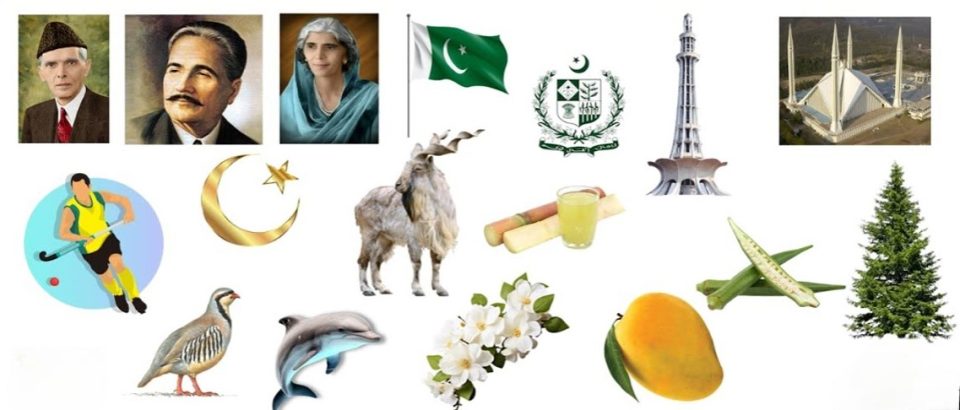
Every country has symbols that represent its identity. These symbols tell a story about history, culture, values, and dreams. For Pakistan, national symbols are more than just official signs — they are reminders of sacrifice, unity, faith, and pride. From the flag that waves high in the sky to the national animal that reflects strength, each symbol carries meaning.
Let’s explore the history, culture, and story behind Pakistan’s national symbols in simple and heartfelt words.
The National Flag
The Pakistan national flag is one of the most recognizable symbols of the country. It has a dark green background with a white vertical stripe on the left, and in the center, a white crescent moon and a five-pointed star.
The green color represents the Muslim majority of Pakistan, while the white stripe stands for religious minorities living in the country. The crescent represents forward movement, and the star symbolizes wisdom and hope.
The flag was officially adopted on 11 August 1947, just days before independence. Since then, it has become a symbol of unity and hope. Every year on 14 August, people proudly raise the flag to celebrate Independence Day.
The National Anthem
Pakistan’s national anthem is known as the Qaumi Taranah. The music was composed by Ahmed Ghulamali Chagla, while the lyrics were written by Hafeez Jalandhari.
The anthem is written in Persianized Urdu and is known for its powerful and poetic words. It speaks of faith, pride, and commitment to the homeland. Whenever the anthem is played — in schools, sports events, or national ceremonies — people stand with respect. It reminds citizens of their shared identity and responsibility toward the nation.
The National Emblem
The national emblem of Pakistan shows a shield in the center with four major crops: cotton, wheat, tea, and jute. These crops represent agriculture and the importance of farming to the country’s economy.
Above the shield is a crescent and star, just like on the flag. Around the shield is a floral design inspired by Mughal art, reflecting the country’s cultural heritage. At the bottom, there is a banner with the national motto: Faith, Unity, Discipline. This motto was given by the founder of Pakistan, Muhammad Ali Jinnah.
The emblem represents strength, tradition, and the guiding principles of the nation.
The National Animal
Pakistan’s national animal is the Markhor. The Markhor is a wild goat known for its beautiful twisted horns. It lives in the northern mountains of Pakistan.
The Markhor symbolizes courage, strength, and independence. It is also a reminder of Pakistan’s rich wildlife and natural beauty. Over the years, efforts have been made to protect this endangered species, showing the country’s commitment to conservation.
The National Flower
The national flower of Pakistan is the jasmine, a small, white, and fragrant bloom that symbolizes purity, simplicity, and peace.
Just like jasmine spreads its fragrance quietly, the flower symbolizes the gentle and peaceful side of Pakistani culture. It is frequently used in celebrations and traditional events, adding beauty and fragrance to special occasions..
The National Bird
The national bird is the Chukar partridge. This bird is known for its beauty, confidence, and strong presence. It is commonly found in rocky and mountainous regions.
The Chukar represents pride and grace. In local folklore and poetry, it is often seen as a symbol of deep love and loyalty.
The National Sport
Pakistan’s official national sport is field hockey.The Pakistan national field hockey team has won several international titles and brought glory to the country.
Hockey was especially popular during the 1960s to 1990s when Pakistan achieved major victories in world tournaments. Even today, it remains a proud part of sports history.
The National Language
Urdu is the national language of Pakistan. Although many regional languages are spoken across the country, Urdu connects people from different provinces.
It is a language of poetry, emotion, and expression. Famous poets like Allama Iqbal used Urdu to inspire unity and hope. Through Urdu, people share stories, songs, and traditions that bind the nation together.
The National Identity and Cultural Symbols
Pakistan is home to breathtaking mountains, rivers, and historical landmarks. From the snowy peaks of the north to the deserts of the south, the land itself is a symbol of beauty and diversity.
Cultural symbols such as traditional dress (shalwar kameez), truck art, and regional music also reflect the country’s colorful heritage. These cultural expressions show how history and creativity come together in everyday life.
The Story Behind the Symbols
Every national symbol of Pakistan carries a story of struggle and hope. The country was created after a long movement for independence. Millions sacrificed for the dream of a separate homeland.
These symbols remind us of that journey. They remind us that freedom came with responsibility. They encourage unity among people of different backgrounds.
National symbols are not just images in books. They live in the hearts of people. When a child salutes the flag at school, when an athlete stands proudly during the anthem, or when families decorate their homes on Independence Day — these symbols come alive.
Conclusion
Pakistan’s national symbols reflect its history, culture, and dreams. The flag represents unity. The anthem inspires pride. The Markhor shows strength. The jasmine spreads peace. Each symbol tells a story of resilience and faith.
Understanding these symbols helps us understand Pakistan itself — a country built on hope, diversity, and determination.
In the end, national symbols are not just official signs. They are reminders of who we are, where we came from, and where we want to go as a nation.
