
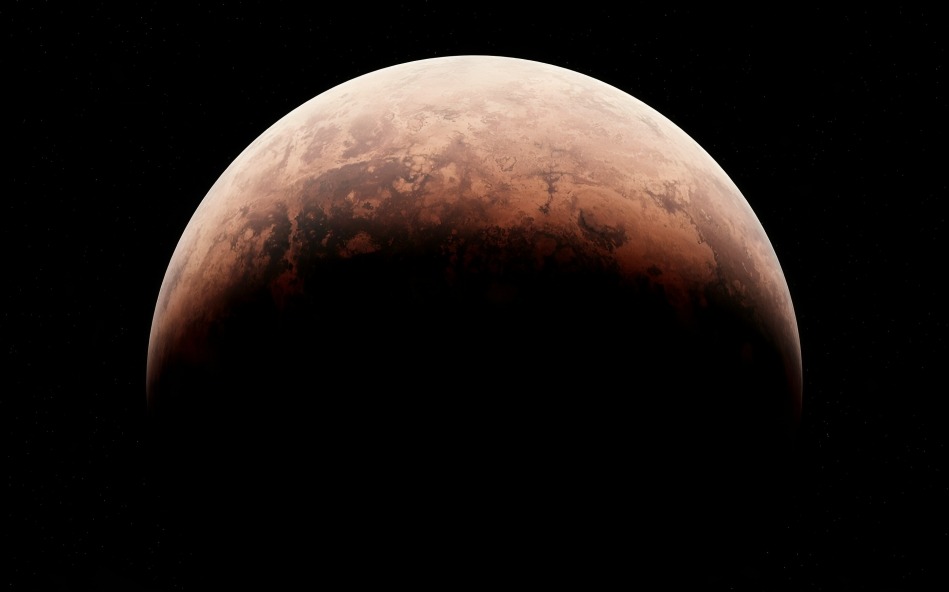
For years, Elon Musk has spoken of Mars not as a distant dream but as a tangible, inevitable milestone—a place where humans will build a second home. SpaceX, his crown jewel of ambition, was created with this singular mission: make life multiplanetary. But today, the path to the Red Planet looks less certain. Technical delays, shifting priorities, and rising competition are threatening the very vision that once put Musk ahead of everyone else.
Mars, it seems, is slipping through his fingers.
The Original Promise
In 2016, Musk took the stage at the International Astronautical Congress and laid out a stunning plan: send humans to Mars within a decade using a fully reusable, stainless-steel rocket system known then as the Interplanetary Transport System (now Starship). It would carry up to 100 passengers, land on Mars, and return to Earth. SpaceX wasn’t just building a rocket—it was rewriting the rules of space travel.
His timeline was wildly ambitious: unmanned cargo flights by 2022, crewed missions soon after.
Today, it’s 2025. And not a single Starship has left Earth orbit.
Starship’s Gravity Problem
Let’s be clear—Starship is the most powerful rocket system ever built. Its potential is historic. But it has yet to prove that it can actually reach orbit, land reliably, or perform complex in-space maneuvers—all of which are crucial for a Mars mission.
Test flights have resulted in spectacular explosions and incomplete success. Though these failures are framed as learning moments (as they should be), the pace of progress isn’t matching the rhetoric.
Starship is still stuck in Earth’s gravitational grip, far from Mars’ dusty plains.
NASA’s Moon—and Mars—Agenda
NASA has become both partner and competitor. Through the Artemis program, NASA selected SpaceX’s Starship as a lunar lander for future Moon missions. While this is a massive win for SpaceX in the short term, it subtly reshapes the mission focus from Mars to the Moon.
This shift matters.
With billions in government contracts on the line, SpaceX is now devoting resources and attention to the Artemis timeline. And while Musk has promised that Starship’s lunar duties will eventually serve Mars ambitions, the reality is that timelines are colliding—and the Moon is winning.
The Rise of Rival Visions
Musk is no longer the only person dreaming about Mars. NASA has its own long-term Mars goals. China has committed to a Mars sample return and eventual human exploration. Private companies like Blue Origin are investing in large rockets and space stations. And Europe is ramping up its own ambitions.
What was once Musk’s undisputed domain is now a competitive arena. And with each year of delay, SpaceX risks losing its first-mover advantage.
Internal Chaos, External Pressure
Meanwhile, SpaceX is juggling multiple demanding projects: Starlink, Starship, Falcon operations, the Polaris Program, NASA partnerships, and commercial launches. Elon Musk himself is also spread thin—managing X (formerly Twitter), Tesla, Neuralink, and The Boring Company.
There’s growing concern that Musk’s divided attention is slowing down the one project that made SpaceX extraordinary. Mars isn’t just another corporate goal—it’s a generational leap. And it requires focused, sustained effort.
A Dream That Needs More Than Vision
Elon Musk has never lacked vision. He is, arguably, one of the most ambitious thinkers of the 21st century. But Mars isn’t just about dreaming big—it’s about executing flawlessly. The planet is 140 million miles away. Getting there—and staying there—requires rocket reliability, environmental sustainability, life-support mastery, and logistical perfection.
So far, we’ve seen blueprints, simulations, and bold declarations. What we haven’t seen is a test mission beyond low Earth orbit.
Conclusion
Mars won’t wait. Political will, public interest, and technological momentum are fragile. The longer it takes to achieve meaningful steps toward a human Mars mission, the more the window narrows.
Elon Musk changed the world by refusing to think small. But today, that same dream is under threat—not from skeptics, but from the weight of reality. And unless SpaceX can move from explosion-filled test flights to proven, orbital successes soon, Musk may find that the future he promised is still possible…
