
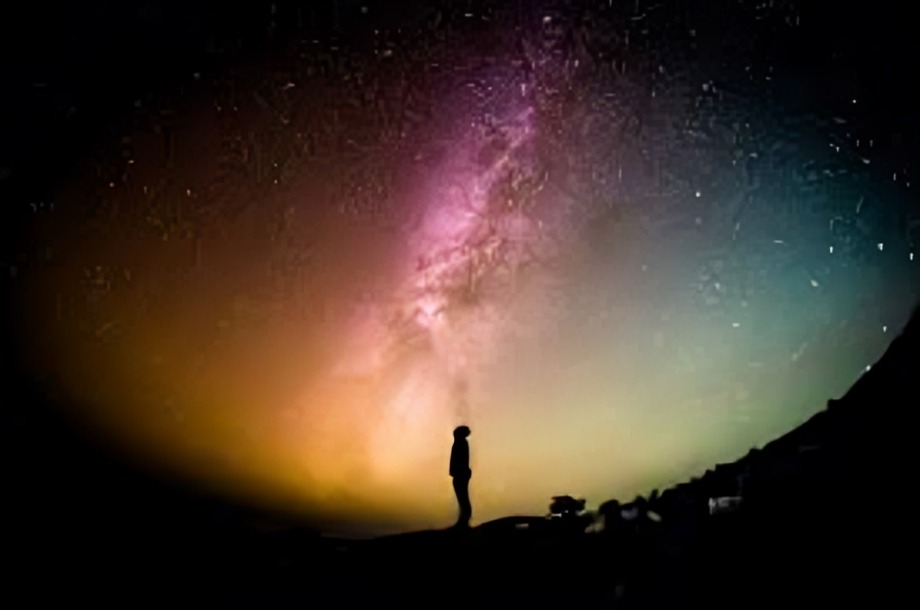
The origin of the universe is one of the oldest and most profound questions humanity has ever asked. Where did everything come from? Why is there something rather than nothing? From ancient myths to modern physics, people have long tried to explain how the universe began.
While science hasn’t provided a single, universally accepted answer, it has narrowed the possibilities down to a few compelling theories. Let’s explore four of the most discussed ideas about how the universe might have come into being — from the scientific to the philosophical.
The Big Bang Theory: The Most Widely Accepted Model
The Big Bang Theory is currently the leading scientific explanation for the origin of the universe. According to this model, about 13.8 billion years ago, all matter, energy, space, and even time itself emerged from a single point of infinite density — a singularity.
This singularity rapidly expanded in a burst of energy and continues to stretch space-time even today, which explains why galaxies are still moving away from each other.
Supporting evidence includes:
- Cosmic Microwave Background Radiation: The afterglow of the Big Bang, detected as faint microwave signals across the sky.
- Redshift of Galaxies: The further away a galaxy is, the faster it’s moving from us, suggesting a continually expanding universe.
- Abundance of Light Elements: The predicted amounts of hydrogen and helium match what we observe in the universe.
But the Big Bang theory raises deeper questions: What caused the singularity? What was there before the Big Bang? This leads to the next possibility.
The Universe Always Existed: No Beginning, No End
Some theories challenge the idea that the universe had a beginning at all. Instead, they propose the universe is eternal, having no starting point.
There are variations of this idea:
- Steady-State Theory (now largely abandoned) claimed the universe always existed in the same form.
- Cyclic Universe Models suggest the universe goes through infinite cycles of expansion and contraction — Big Bangs followed by Big Crunches.
- Quantum Gravity Models imply that before the Big Bang, time itself may not have existed in the way we understand it.
Though these models are harder to test, they offer an intriguing possibility: the universe didn’t “come into being” — it just is.
Created by a Higher Intelligence: The Philosophical or Theological View
Beyond the scientific lens lies the philosophical and theological explanation: that the universe was created by an intelligent, purposeful force — often identified as God or some higher power.
This view is ancient and persists in many cultures and religions:
- In monotheistic faiths like Christianity, Islam, and Judaism, a divine Creator intentionally brought the universe into existence.
- Some philosophers argue that a prime mover or uncaused cause is necessary to explain why anything exists at all.
Though this view is outside the realm of empirical science, it remains important to many because it offers meaning, intentionality, and purpose — things science doesn’t attempt to explain.
Critics, however, argue that invoking a creator doesn’t answer the ultimate question — it just pushes it back one level: Who created the Creator?
The Universe Came from Nothing: Quantum Fluctuations and Multiverse Theories
A radical idea proposed by some theoretical physicists is that the universe spontaneously emerged from nothing — not nothing as in “empty space,” but a quantum vacuum, where particles and energy can pop into existence briefly due to the uncertainty principle.
This is the quantum fluctuation model: the universe could have emerged from a temporary violation of the energy balance of “nothingness.” This isn’t magic — it’s mathematics at the quantum level.
There’s also the multiverse theory, which suggests our universe is just one of countless universes, each forming with different physical laws. In this view, universes might constantly “bubble” into existence, and we happen to live in one that supports life.
These theories are speculative and hard to test, but they’re grounded in principles from quantum physics and cosmology.
Conclusion
Each of these four possibilities — Big Bang, eternity, intelligent design, and quantum emergence — offers a different perspective on how the universe began. None are complete. Some are more scientific; others are more philosophical. And yet, all are deeply human in their attempt to make sense of existence.
Ultimately, the question of how the universe came into being may always sit at the intersection of science, philosophy, and belief. But asking the question — and exploring the possible answers — is what makes us not just inhabitants of the universe, but curious observers of its mystery.
Maybe that’s the most profound origin story of all.
