
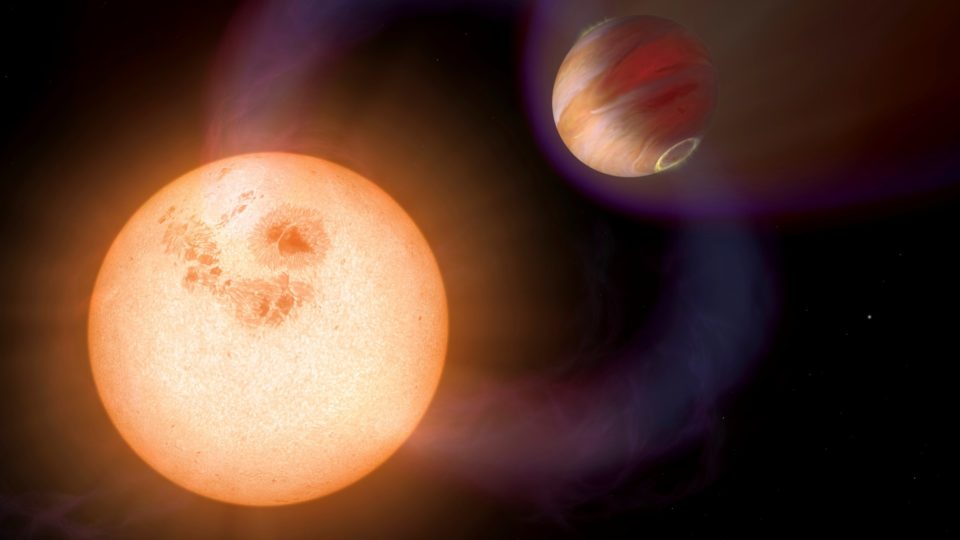
When scientists look at planets far beyond our solar system, they often study their atmospheres to understand what they are made of and what conditions might be like there. One exciting area of research involves the atmosphere of a Jupiter-mass exoplanet that is rich in hydrogen sulphide and metals. Let’s explore what this means and why it matters.
What Is a Jupiter-Mass Exoplanet?
To start, let’s define what a Jupiter-mass exoplanet is. Imagine a planet that is similar in size and weight to Jupiter, the largest planet in our solar system. This type of exoplanet is called a Jupiter-mass exoplanet. These planets are so big that they can have thick, dense atmospheres with many interesting features. Scientists study these planets to learn more about how different atmospheres form and behave.
Understanding the Atmosphere of These Exoplanets:
The atmosphere of a planet is the layer of gases that surrounds it. Just as Earth has an atmosphere made of oxygen and nitrogen, exoplanets have their own atmospheres with different gases. For a Jupiter-mass exoplanet, the atmosphere can be extremely thick and full of different kinds of gases.
What Is Hydrogen Sulfide?
One of the main gases in the atmosphere of this particular exoplanet is hydrogen sulphide. Hydrogen sulphide is a gas that has a strong, unpleasant smell like rotten eggs. On Earth, it’s often found in natural gas and volcanic eruptions. Even though it doesn’t smell nice, hydrogen sulphide is very interesting to scientists because it tells them a lot about the planet’s atmosphere.
How Hydrogen Sulfide Affects the Atmosphere
On this Jupiter-mass exoplanet, hydrogen sulphide is one of the dominant gases. This means it is present in large amounts, which can lead to some very cool effects:
Cloud Formation:
Hydrogen sulphide can form clouds in the atmosphere. These clouds might look very different from the clouds we see on Earth. They can create beautiful and unique patterns in the sky.
Weather Patterns:
The presence of hydrogen sulphide can also influence the weather. For example, it can create storms or affect the way heat is distributed around the planet.
The Role of Metals in the Atmosphere:
In addition to hydrogen sulphide, this exoplanet’s atmosphere is rich in metals. These metals can include elements like iron, magnesium, and nickel. Here’s why metals are important:
Metal Clouds:
Just like hydrogen sulphide can form clouds, metals in the atmosphere can also create clouds. These metal clouds can look very different from what we see on Earth and can be made up of tiny metal droplets.
Reflective Effects:
Metal clouds can reflect sunlight in interesting ways. This reflection can make the exoplanet look bright or even change colours when we look at it from Earth.
Atmospheric Chemistry:
Metals play a big role in the chemistry of the atmosphere. They can interact with other gases and influence the overall makeup of the atmosphere.
Why Study These Gases and Metals?
Scientists are interested in studying hydrogen sulphide and metals in exoplanet atmospheres for several reasons:
Understanding Planet Formation:
By examining these atmospheres, scientists can learn more about how Jupiter-mass exoplanets form and evolve over time. This helps us understand not just this planet, but also the formation of other planets in the universe.
Comparing with Other Planets:
Studying the atmospheres of these exoplanets allows scientists to compare them with the atmospheres of other planets, including those in our own solar system. This comparison helps us learn more about different planetary environments.
Exploring Potential for Life:
While hydrogen sulphide itself is not a sign of life, understanding the composition of exoplanet atmospheres helps scientists look for signs of habitability or conditions that might support life in the future.
How Do Scientists Study These Atmospheres?
To study the atmospheres of exoplanets, scientists use a few different methods:
Observing Transits:
When an exoplanet passes in front of its star from our point of view, it can block some of the star’s light. Scientists can measure this light to see what gases are in the planet’s atmosphere.
Spectroscopy:
This technique involves analysing the light from the exoplanet’s atmosphere to determine which gases and metals are present. Each gas and metal absorbs and emits light in unique ways, which scientists can use to identify them.
Space Telescopes:
Telescopes in space can observe exoplanets without the interference of Earth’s atmosphere. Instruments like the James Webb Space Telescope are used to gather detailed information about exoplanet atmospheres.
Exciting Discoveries Ahead:
Studying a Jupiter-mass exoplanet with a rich atmosphere of hydrogen sulphide and metals opens up a world of possibilities for new discoveries. As technology improves and more exoplanets are discovered, scientists will be able to learn even more about these fascinating distant worlds.
Conclusion:
The atmosphere of a Jupiter-mass exoplanet filled with hydrogen sulphide and metals is a treasure trove of information. From the clouds of hydrogen sulphide to the metal-rich skies, this exoplanet offers a glimpse into the diverse and mysterious environments that exist in our universe. By exploring these atmospheres, scientists are uncovering the secrets of planetary formation, comparing different worlds, and searching for the building blocks of life.
So the next time you hear about a new exoplanet discovery, remember that there’s a lot more to it than just finding a new planet—it’s about exploring the unknown and expanding our understanding of the universe.
