
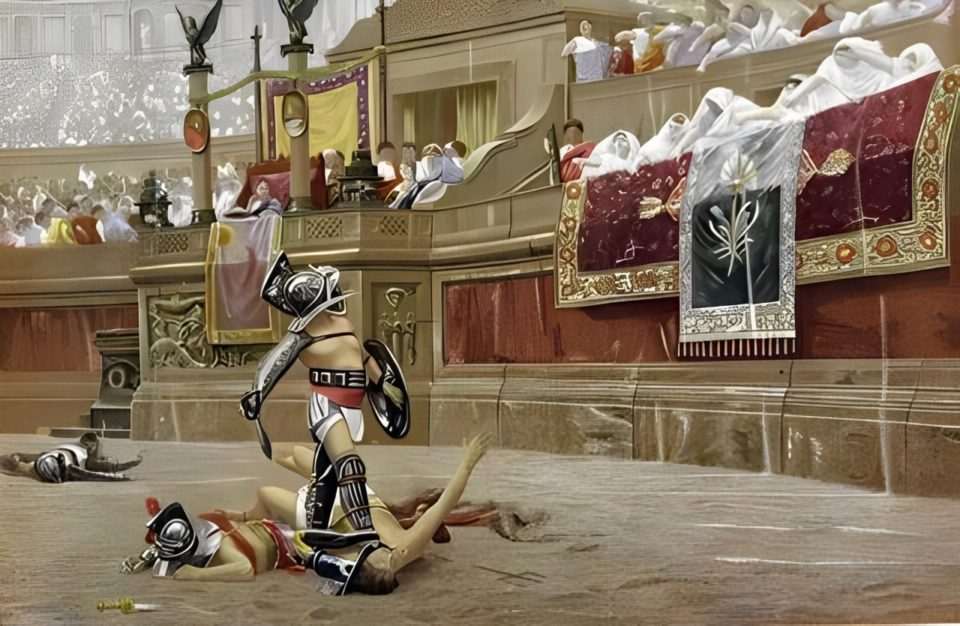
The world of ancient Rome was one of grandeur and brutality, and few symbols capture its spirit better than the gladiators. These warriors, often slaves or prisoners of war, captivated Roman audiences with their courage, skill, and spectacle in the arena. While most gladiators remain anonymous, a few names have stood the test of time. Here are five of the most famous gladiators from ancient Rome.
Spartacus
Arguably the most famous gladiator in history, Spartacus was a Thracian soldier who became a slave and was trained as a gladiator in Capua. His story is legendary due to his role in leading a massive slave revolt against the Roman Republic in 73 BCE. Known as the Third Servile War, the rebellion saw Spartacus and his followers achieve a series of impressive victories against Roman forces. Although the revolt was eventually crushed, Spartacus’s legacy endures as a symbol of resistance and freedom.
Commodus
Unlike other gladiators, Commodus was an emperor who took to the arena by choice. Reigning from 180 to 192 CE, Commodus’s participation in gladiatorial games was highly controversial. He fancied himself a divine warrior and fought in rigged matches to showcase his supposed prowess. While his actions were criticized by the Roman elite, they entertained the masses. Commodus’s antics in the arena were part of his broader descent into tyranny, ultimately leading to his assassination in 192 CE.
Crixus
Crixus was another key figure in the gladiator rebellion led by Spartacus. A Gallic gladiator, Crixus played a prominent role as a commander in the uprising. While he initially fought alongside Spartacus, Crixus eventually split from him, leading a separate group of rebels. Tragically, Crixus’s forces were defeated by Roman legions, and he was killed in battle. Despite his death, Crixus remains celebrated as a brave and defiant gladiator.
Flamma
Flamma was a Syrian gladiator whose name became synonymous with exceptional bravery. He fought in 34 recorded battles, an extraordinary number for a gladiator, and won many of them. Despite being offered his freedom multiple times—a rare honor—Flamma chose to remain in the arena, likely due to the fame and adoration he received. His choice highlights the complex lives of gladiators, who often balanced the allure of celebrity with the constant threat of death.
Priscus and Verus
Priscus and Verus are remembered for their remarkable duel during the inaugural games of the Colosseum in 80 CE. Both were highly skilled gladiators, and their evenly matched fight captivated the audience. In a rare display of mutual respect and exceptional performance, both men were declared victors by Emperor Titus and awarded their freedom. Their story, immortalized by the poet Martial, stands out as an example of honor and camaraderie in the brutal world of gladiatorial combat.
Conclusion
The gladiators of ancient Rome were more than just fighters; they were icons of resilience, skill, and, in some cases, rebellion. Figures like Spartacus and Flamma continue to fascinate us, embodying the human spirit’s capacity to endure and defy the odds. Their stories, steeped in both tragedy and triumph, remind us of the complex tapestry of ancient Rome’s history, where the line between hero and spectacle was often blurred.
