
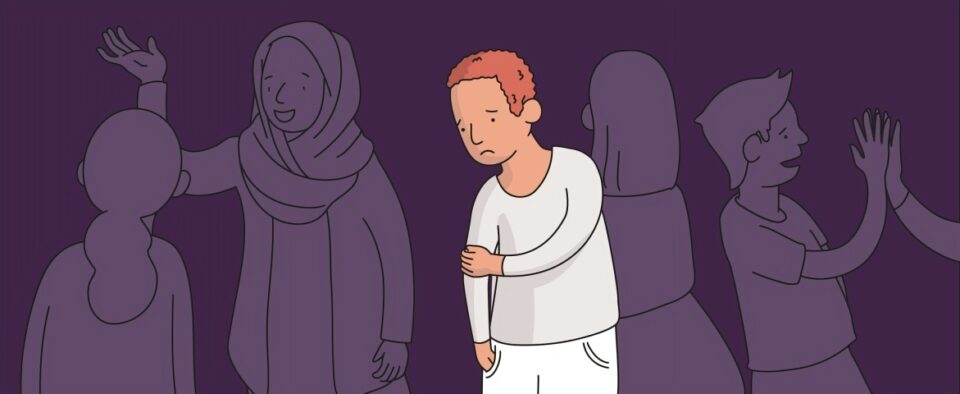
Let’s be real for a minute. You’re at a gathering, maybe a friend’s birthday or a work event. People are laughing in groups, making small talk with ease, and there you are—trying to figure out where to stand, what to say, and how to make your hands look like they belong on your body. Your heart’s racing, your mind’s spinning, and you’re wondering, Why is this so hard for me?
If that sounds familiar, here’s the truth you need to hear: You’re not alone.
Social anxiety is more common than most people think—and it doesn’t mean you’re broken, weird, or incapable of connection. It means you’re human. And this article? It’s a real talk about what social anxiety feels like, where it comes from, and how to start showing up without shame.
What Social Anxiety Actually Is (and Isn’t)
Social anxiety isn’t just being shy. It’s more than nerves before public speaking or butterflies before a date. It’s a persistent fear of being judged, rejected, or embarrassed in social situations—sometimes so intense it leads to avoiding them altogether.
It might look like:
- Replaying every conversation in your head, wondering if you sounded stupid.
- Cancelling plans last minute because the thought of going makes you feel sick.
- Feeling like an outsider, even among people who care about you.
- Obsessing over every glance, pause, or reaction during a chat.
It’s not just “overthinking.” It’s a real psychological experience. And it’s exhausting.
Where It Comes From
Social anxiety has roots—sometimes in past experiences, like bullying, rejection, or growing up in environments where you felt unsafe to express yourself. Sometimes, it’s tied to perfectionism: the pressure to always say the “right” thing, to never be awkward, to never offend.
There’s also a biological factor—some people are more sensitive to social threats because of how their brains are wired. So if you’ve ever thought, Why can’t I be like other people? the answer is: you can, but your brain might just need a little more time and support to get there.
You’re Not Weird for Feeling This Way
One of the most isolating parts of social anxiety is the belief that everyone else has it all figured out—and that you’re the only one struggling. But here’s the deal: so many people are feeling just like you, even if they hide it well.
That confident coworker? They might have practiced their conversation in their head a dozen times. That funny friend? Maybe humor is their way of coping with anxiety too.
You’re not weird. You’re not broken. You’re part of a silent club filled with people who understand exactly how you feel.
What You Can Start Doing Today
You don’t have to fix everything overnight—but you can take small steps that add up. Here are a few:
Shift the focus off yourself
Instead of worrying about how you’re being perceived, focus on curiosity. Ask questions. Listen actively. Most people love to talk about themselves—and being a good listener is a superpower.
Challenge the lies in your head
Social anxiety often whispers things like, “They’re judging you,” or “You sounded dumb.”
Stop and ask: Is that true? Do I have evidence? Most of the time, those thoughts aren’t facts—they’re fear dressed up as logic.
Practice low-stakes exposure
You don’t have to dive into a crowd. Start with small interactions—a quick chat with a barista, a hello to a neighbor. The more you practice, the less power those situations will hold.
Take care of your body
Sleep, exercise, and nutrition all affect your mental resilience. Anxiety is harder to manage when your body is already in survival mode.
Consider therapy
There’s no shame in getting help. Cognitive Behavioral Therapy (CBT) is especially effective for social anxiety. A good therapist can help you reframe negative thoughts and build coping strategies.
Conclusion
Social anxiety doesn’t make you less than. It doesn’t mean you’re not capable of deep friendships, fulfilling relationships, or thriving in group settings. It just means your path might be a little different—and that’s okay.
Healing isn’t about becoming someone else. It’s about learning to show up as yourself—and realizing that you’re enough, even when you’re anxious, even when you’re awkward, even when you don’t have the perfect thing to say.
You’re not alone.
And you don’t have to do this alone either.
