
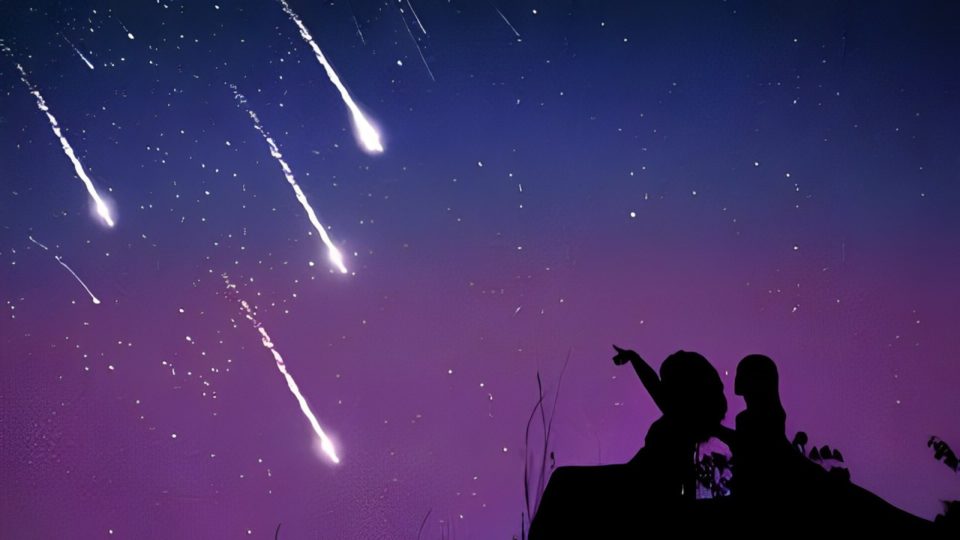
The sight of a shooting star streaking across the night sky is breathtaking. Many make wishes upon these flashes of light, enchanted by the idea of a “star” falling from the heavens. But in reality, shooting stars aren’t stars at all; they’re meteors, tiny particles from space that burn up when they enter Earth’s atmosphere.
Let’s dive into the science behind these celestial streaks of light, understand their origins, and explore what makes them such a fascinating part of our night sky.
What Is a Shooting Star?
A shooting star, or meteor, is a small fragment of rock or metal, often as tiny as a grain of sand, that comes from outer space. These fragments are usually parts of comets or asteroids. When they collide with Earth’s atmosphere at high speed, the intense friction causes them to heat up and burn brightly, creating a visible streak of light.
The glow of a shooting star only lasts for a brief moment as the meteor burns up and disintegrates. This rapid vaporization is what we see as a “shooting star,” even though it’s not actually a star.
The Origins of Meteors
The particles that create shooting stars often come from comets, which are icy bodies in the solar system that orbit the Sun. When comets pass near the Sun, they release dust and debris, leaving a trail of particles in their path. As Earth crosses these trails, the particles collide with our atmosphere, resulting in meteor showers.
Asteroids, which are rocky bodies mainly found in the asteroid belt between Mars and Jupiter, are another source of meteoroids. When two asteroids collide, fragments are scattered in various directions, and some of these can end up intersecting Earth’s orbit.
Why Do Meteors Glow?
Meteors streak into Earth’s atmosphere at velocities ranging from 25,000 to 160,000 miles per hour (40,000 to 257,000 kilometers per hour).This extreme speed causes them to compress the air in front of them, which increases the temperature and causes the particles to glow brightly. It’s this rapid heating and vaporization that creates the streak of light we see.
The size and speed of the meteor determine the brightness of the “shooting star.” Larger meteors, sometimes called fireballs, can be bright enough to light up the night sky for several seconds before they burn up.
Meteor Showers: When Shooting Stars Appear in Numbers
Meteor showers occur when Earth passes through a dense trail of debris left by a comet. This results in an increased number of meteors visible in the sky, creating a celestial display. Some of the most well-known meteor showers include:
Perseids: Occurring in August, this shower originates from the comet Swift-Tuttle and is one of the most popular meteor showers due to its high rate of meteors.
Geminids: Taking place in December, the Geminids are unusual because they are thought to come from an asteroid called 3200 Phaethon, not a comet.
Leonids: This shower, occurring in November, originates from the comet Tempel-Tuttle and can sometimes produce meteor storms, with hundreds or thousands of meteors per hour.
During a meteor shower, stargazers can see dozens or even hundreds of shooting stars in an hour, especially if the sky is dark and clear.
Fun Facts About Shooting Stars
Meteor vs. Meteorite: If a meteor survives its fiery descent and lands on Earth’s surface, it’s called a meteorite. Most meteors are too small to survive the journey, but larger ones occasionally make it through.
Speedy Streaks: Most meteors we see in the sky are just a few millimeters in size, but they’re moving so fast that the friction alone makes them glow brightly.
Colorful Trails: Meteors can appear in different colors depending on their composition. Iron-rich meteors may produce yellow hues, while those containing magnesium may appear green.
Ancient Beliefs: Ancient civilizations often associated shooting stars with divine messages or omens, believing they signaled good luck or the granting of wishes.
Meteor Showers Are Predictable: Because they follow the orbits of comets and asteroids, meteor showers occur at regular intervals each year. This allows astronomers and enthusiasts to plan for and enjoy these celestial events.
Conclusion
Though they aren’t stars, meteors—or “shooting stars”—remain one of nature’s most mesmerizing spectacles. They remind us of the vastness of space, the remnants of ancient cosmic bodies, and the beautiful chaos of our universe. The next time you see a shooting star, you’ll know that it’s not a star at all, but a fragment of our solar system’s history briefly lighting up the sky.
