
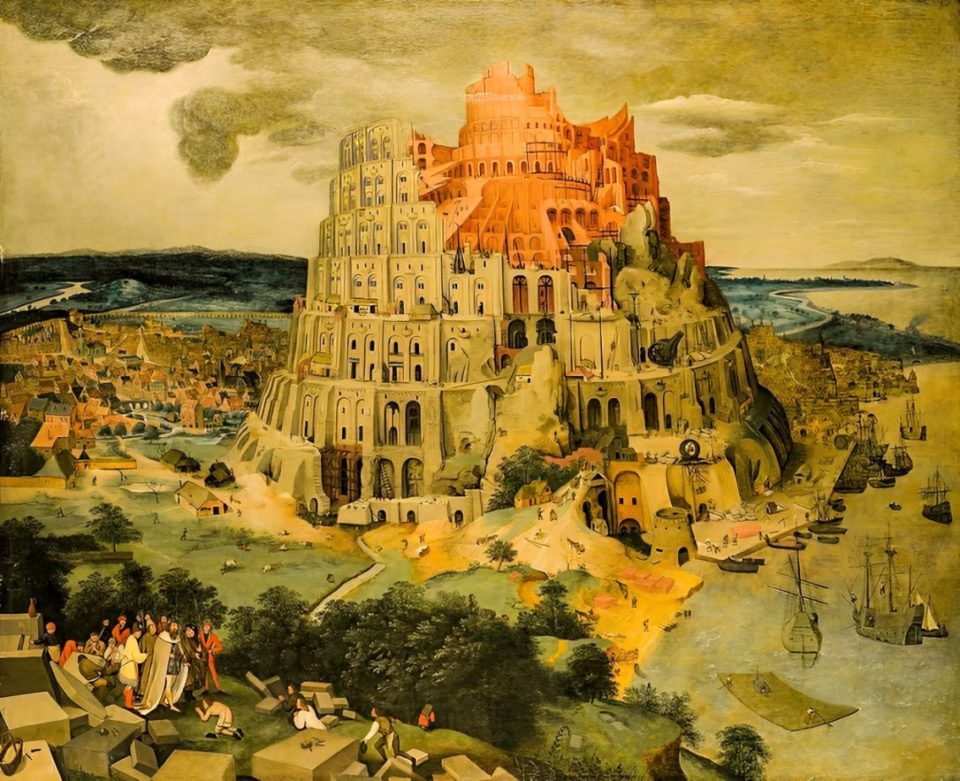
The story of the Tower of Babel is one of the most captivating and mysterious accounts in the Bible. Found in the Book of Genesis, it tells of a time when all of humanity spoke a single language and worked together to build a tower that would reach the heavens. This ambitious project was meant to make a name for themselves and prevent them from being scattered across the earth. However, according to the story, God was displeased with their pride and ambition. To halt their progress, He confused their language, causing them to no longer understand one another. As a result, the people abandoned the tower and dispersed across the world, giving rise to the many different languages we have today.
But did the Tower of Babel really exist? This question has intrigued scholars, theologians, and archaeologists for centuries. While the tale is rich with symbolic meaning, exploring the possibility of its historical basis sheds light on ancient civilizations and the origins of language.
The Tower of Babel in Historical Context
The story of the Tower of Babel is believed to have been inspired by the great ziggurats of ancient Mesopotamia, particularly the ziggurat of Etemenanki in Babylon. Ziggurats were massive structures built as temples to the gods, with a stepped design that could resemble a tower. Etemenanki, dedicated to the god Marduk, was one of the most famous ziggurats and stood in the heart of Babylon, which was one of the most important cities of the ancient world.
Etemenanki, which means “House of the Foundation of Heaven and Earth,” was said to have been a towering structure, possibly reaching heights of up to 300 feet. While its exact dimensions are debated, historical texts and archaeological evidence suggest that it was an impressive architectural feat, inspiring awe and reverence.
Linguistic Diversification: Myth or Reality?
The confusion of languages at Babel is a key element of the story, explaining the diversity of languages across the world. Linguistically, the tale reflects an ancient attempt to explain a phenomenon that was, and still is, quite complex. Modern linguistics shows that languages evolve naturally over time, influenced by migration, cultural exchange, and isolation. The idea of a single original language, or a “proto-language,” is a topic of study in historical linguistics. Some theories suggest that all human languages may have descended from a common ancestral tongue, though this idea remains speculative.
While the story of Babel offers a symbolic explanation for the diversity of languages, it is unlikely that the world’s languages suddenly emerged from a single event. Instead, linguistic diversity developed gradually over millennia, shaped by human movement, geography, and social factors.
Archaeological Insights and Interpretations
Archaeologists have yet to find definitive evidence of the Tower of Babel as described in the Bible. However, the remains of Etemenanki and other ziggurats provide a tangible link to the ancient world’s monumental construction projects. These structures, built with massive mud bricks and rising in tiers, would have been among the most prominent and awe-inspiring sights of their time.
Some scholars propose that the biblical story of the Tower of Babel may have been a way to explain the ruins of such structures, especially if they were found in a state of abandonment or partial destruction. The scattering of people and the confusion of languages might symbolize the decline of a once-great civilization or the cultural and linguistic diversity observed by the story’s authors.
Symbolic Interpretations
Beyond its potential historical basis, the Tower of Babel story carries deep symbolic meaning. It can be seen as a cautionary tale about human pride and the limits of human ambition. The idea that humanity, in its arrogance, attempted to reach the divine only to be humbled by God, is a theme that resonates with many religious and philosophical teachings.
The scattering of the people and the diversification of languages also reflects the broader biblical theme of unity and division. The story may serve as an allegory for the human condition, where the desire for unity and common purpose often clashes with the reality of diversity and difference.
Conclusion
The question of whether the Tower of Babel really existed may never be fully answered. While there is no concrete archaeological evidence to confirm the existence of the tower as described in the Bible, the story is likely rooted in the historical reality of ancient Mesopotamian architecture and the cultural memory of the people who lived there.
Whether viewed as a literal event, a myth with historical underpinnings, or a symbolic tale, the Tower of Babel continues to captivate the imagination. It serves as a powerful reminder of the complexities of human ambition, the origins of linguistic diversity, and the enduring quest to understand our past.
