
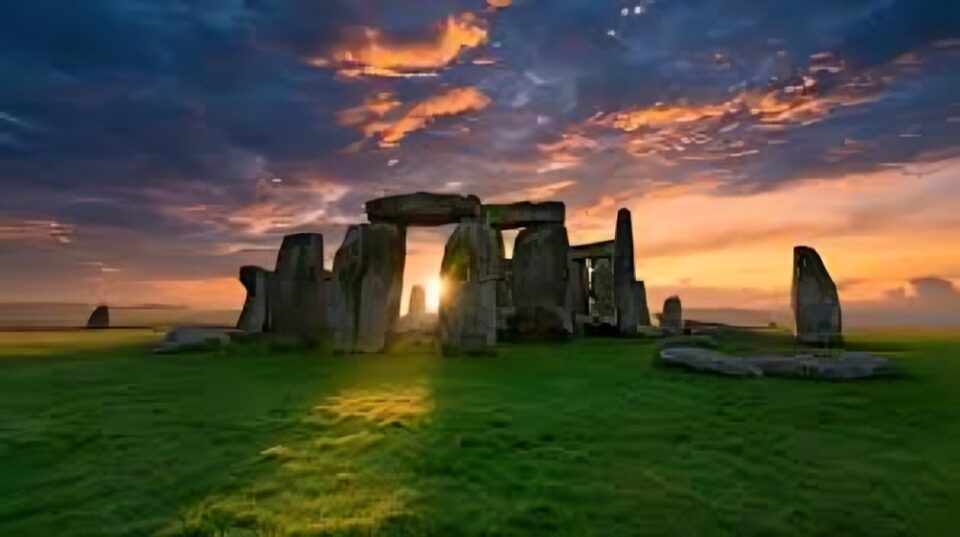
Stonehenge, the mysterious ring of massive stones standing on Salisbury Plain in England, has puzzled historians, archaeologists, and dreamers for centuries. Its origins predate the Roman Empire by more than a thousand years, yet when the Romans invaded Britain in the first century AD, they encountered this strange monument. What did they make of it? Did they leave their own mark on the site—or perhaps uncover secrets that remain hidden to us today?
The Roman Encounter with a Prehistoric Mystery
When the Romans marched into Britain under Emperor Claudius in 43 AD, they brought with them their engineering genius, military discipline, and habit of documenting the world they conquered. But what they found at Stonehenge was unlike anything in their empire. Unlike Roman amphitheaters, aqueducts, or temples, Stonehenge had no obvious function.
Roman writers never mentioned Stonehenge directly, but archaeological evidence suggests they were aware of it. Traces of Roman pottery, coins, and even building material have been uncovered near the stones, showing that Roman activity reached the area. To them, Stonehenge may have been a sacred or cursed place—perhaps left to the druids, whom the Romans regarded with fear and suspicion.
A Sacred Site or a Stage for Power?
Some historians believe the Romans may have co-opted Stonehenge for their own purposes. The Romans often adopted and reshaped local traditions in order to assert control. Temples, shrines, and rituals dedicated to Roman gods were frequently built on top of earlier sacred sites. Could Stonehenge have briefly served as a backdrop for Roman rituals, sacrifices, or displays of authority?
Others argue the Romans may have left the site untouched out of respect—or fear. Their campaign against the druids, especially on Anglesey, suggests they saw Britain’s native religion as dangerous. Stonehenge, with its eerie alignment to the sun and its colossal stones, may have symbolized a power they couldn’t easily erase.
The Roman Stones: Evidence of Construction?
One of the more intriguing theories is whether the Romans actually tried to reconstruct or alter Stonehenge. Some broken stones and holes around the monument date roughly to Roman times. Were they digging, moving, or even planning to repurpose the stones for roads and fortifications? Romans were practical builders—yet the sheer size of Stonehenge’s megaliths might have deterred even them.
Another possibility is symbolic. The Romans often connected themselves to legendary pasts. If they could associate Stonehenge with Roman myths—perhaps linking it to their own gods or legendary heroes—they might have seen it as a way to claim not only Britain’s land, but also its deep history.
Conclusion
Today, Stonehenge remains firmly a monument of prehistory, not of Rome. Yet the Roman presence at the site reminds us that ancient wonders do not exist in isolation. Civilizations overlap, reinterpret, and sometimes clash with the mysteries left behind by earlier peoples.
The real secret may not be whether the Romans altered Stonehenge, but how this monument—so alien to their world—forced them to confront something they could not conquer: time itself. For an empire built on mastery and order, Stonehenge’s silent stones stood as a reminder that some mysteries are older, and greater, than any empire.
Do you also want me to enrich the conclusion with a modern reflection—like what Stonehenge teaches us today about legacy and power?
