
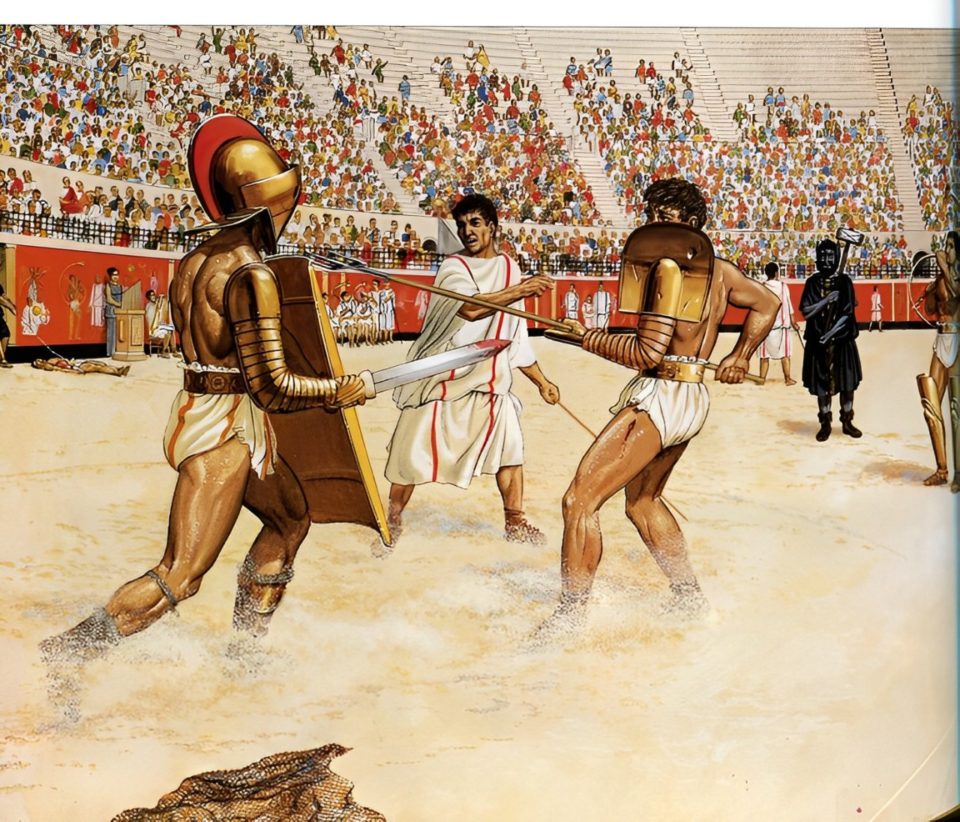
Gladiatorial games, known as munera, were among the most iconic forms of entertainment in ancient Rome. These blood-soaked spectacles, held in massive arenas, captivated audiences with their intensity and drama. But the origin of these games is rooted in more than just entertainment; they held cultural, religious, and political significance that evolved over centuries.
Early Beginnings: Etruscan Influence and Funeral Rites
The roots of gladiatorial combat likely lie with the Etruscans, a civilization that predated Rome in the Italian peninsula. According to historical sources, the Etruscans practiced munera as part of funeral rites, known as fungus. When a prominent figure died, their family would hold games as a way to honor the dead, believing that blood offerings could appease the spirits in the afterlife. This concept of sacrificial combat as a tribute to the deceased slowly integrated into Roman culture as the city absorbed Etruscan traditions.
The earliest recorded gladiatorial games in Rome were in 264 BCE, held at the funeral of a nobleman named Decimus Junius Brutus. His family staged a small set of combat events in honor of his memory, setting a precedent that other elite Roman families followed. Over time, these games became increasingly popular and widespread.
Expansion and State Sponsorship
As the Roman Republic grew, gladiatorial games shifted from family-sponsored funerary rituals to public events supported by the state. Wealthy politicians recognized the potential of these games as a means to gain public favor. By sponsoring large gladiatorial events, politicians could demonstrate their wealth and generosity, strengthening their political influence. Julius Caesar famously hosted grand games to boost his popularity among Roman citizens.
With the rise of the Roman Empire, gladiatorial games became institutionalized. Emperors often sponsored games to win favor with the populace and to project an image of power and control. The games were no longer confined to funerary events but were scheduled regularly as public spectacles for entertainment, celebration, and even political propaganda.
The Role of the Colosseum and Professional Gladiators
The construction of the Colosseum in 80 CE by Emperor Vespasian marked a new era for gladiatorial games. This monumental structure could hold tens of thousands of spectators and allowed for more elaborate events with professional gladiators. These fighters, who were either slaves, prisoners of war, or condemned criminals, trained in special schools called ludi gladiatorii.
The games evolved from simple combats to grand spectacles, complete with exotic animals, reenactments of famous battles, and complex combat scenarios. Over time, professional gladiators garnered fame, and some even gained their freedom and amassed followings. The structure and professionalization of the games underscored the Romans’ fascination with power, bravery, and spectacle.
Decline and Legacy
By the 4th century CE, the popularity of gladiatorial games began to wane, due in part to the influence of Christianity, which opposed the violent nature of the games. Emperor Constantine I issued an edict in 325 CE that began to curtail the games, and in 404 CE, Emperor Honorius officially banned gladiatorial contests. Although the games ended, their legacy lived on, shaping popular perceptions of ancient Rome and influencing modern-day entertainment.
Conclusion
The gladiatorial games, initially rooted in ritual and honor, evolved into an integral part of Roman life, serving as a medium for public entertainment and political influence. From funerary rites to grand public spectacles, these games reflected the values, ambitions, and power dynamics of ancient Rome. The enduring fascination with gladiators and their brutal contests is a testament to the profound impact of these ancient traditions on world history and popular culture.
