
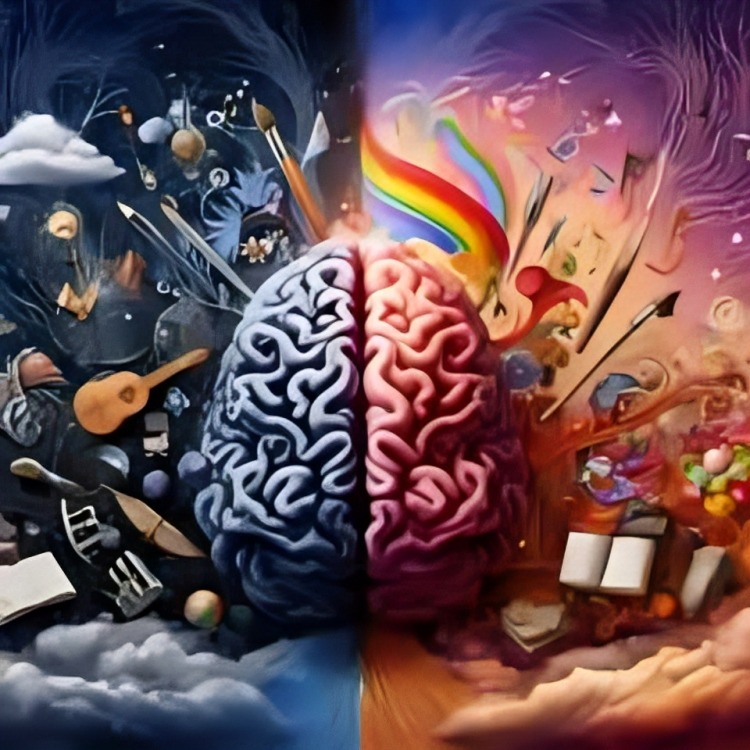
Most of us are born brimming with creativity. As children, we draw, imagine, invent stories, and solve problems in wild and original ways. But somewhere along the path into adulthood, creativity often slips away. Responsibilities pile up, routines harden, and the spark that once came so easily feels buried under the weight of “real life.”
The good news? Neuroscience shows that creativity isn’t lost forever—it’s dormant. And with the right practices, you can reawaken it. Here’s the fascinating science behind creativity and the secret to reclaiming it when you feel stuck.
The Brain on Creativity
Creativity doesn’t come from a single “creative” part of the brain. Instead, it’s the result of multiple networks working together:
- The Default Mode Network (DMN)
This is the network active when your mind wanders—when you daydream, imagine, or let your thoughts drift. It’s essential for brainstorming and connecting unrelated ideas. - The Executive Control Network (ECN)
This system helps you focus, evaluate, and decide which ideas are useful. It turns raw imagination into workable solutions. - The Salience Network
This acts like a switch, helping the brain move between imagination and focused thinking, deciding which ideas deserve attention.
When these three networks work in harmony, creativity flourishes. But stress, rigid routines, and overstimulation can weaken their connection, leaving you feeling “uncreative.”
Why Creativity Gets Lost
Several factors dampen creativity as we grow older:
- Stress and Overthinking shut down the DMN, leaving little room for daydreaming.
- Perfectionism silences ideas before they can grow.
- Repetition and Routine wire the brain for efficiency, not exploration.
- Lack of rest starves the brain of the downtime it needs to make new connections.
The result? Your brain stops practicing creative thinking, much like a muscle that weakens from lack of use.
The Neuroscience Secret: Reclaiming Creativity Through “Neuroplastic Play”
The secret to regaining lost creativity lies in neuroplasticity—the brain’s ability to rewire and form new connections throughout life. By engaging in specific habits that nudge the brain’s networks back into harmony, you can unlock creativity again.
Here are five science-backed ways to do it:
1. Allow Mind-Wandering on Purpose
Studies show that creativity sparks when the DMN is active. Instead of forcing solutions, take breaks: go for a walk, doodle, or let your thoughts drift. This “constructive daydreaming” gives your brain space to connect ideas in new ways.
2. Switch Between Divergent and Convergent Thinking
Divergent thinking is brainstorming without judgment. Convergent thinking is narrowing down and refining ideas. The ECN and DMN balance each other when you practice both. Set aside time to brainstorm wildly—then later, evaluate which ideas are practical.
3. Engage in Playful, Novel Activities
Trying something new—a dance class, learning an instrument, improvising—stimulates the salience network. Playfulness signals your brain that it’s safe to explore, helping you rediscover childlike imagination.
4. Embrace Rest and Sleep
During rest, the brain consolidates ideas and forms unexpected links. Neuroscience research shows REM sleep, in particular, boosts creative problem-solving. Protect your downtime—it’s not laziness, it’s brain fuel.
5. Reframe Failure as Experimentation
Perfectionism paralyzes creativity. Scientists found that people who view failure as feedback activate reward pathways that encourage more experimentation. Treat your projects as experiments, not final judgments.
Why This Matters Now
In a world of constant noise, speed, and productivity, creativity often feels like a luxury. But it’s not. Creativity is problem-solving, resilience, and adaptability—it’s how we survive and thrive. Neuroscience reminds us that creativity is not a gift only a few are born with; it’s a skill all of us can reclaim.
Conclusion
If you feel like your creativity has slipped away, remember: it isn’t gone—it’s waiting. The networks in your brain can be reawakened through rest, play, experimentation, and intentional mind-wandering.The real secret isn’t about becoming more creative—it’s about returning to the creativity that’s always been inside you.
Would you like me to also create a practical “daily neuroscience routine” (like a 5-step schedule for boosting creativity each day) to go
