
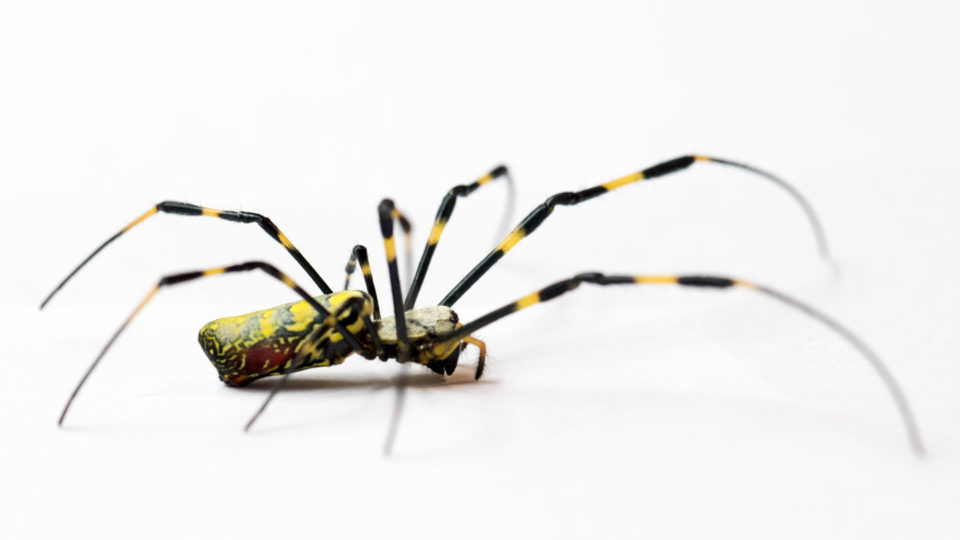
Discovering the Joro Spider: A Fascinating Look at Its Eight Legs and Hand-Sized Dimensions
What is the Joro Spider?
The Joro spider is a type of spider that belongs to the Nephila genus. It’s known scientifically as Nephila clavata. These spiders are native to Asia, particularly in countries like Japan, Korea, and China. They are often found in forested areas, where they spin large, intricate webs to catch prey.
Appearance
One of the most striking features of the Joro spider is its size. These spiders can grow to be quite large, with some individuals reaching the size of a human hand when including their legs. Their bodies are typically brown or reddish-brown in colour, and they have distinctive markings on their abdomen Have you ever heard of the Joro spider? It’s a creature that’s both fascinating and a bit frightening, with its eight legs and large size. Let’s take a closer look at this intriguing arachnid and learn more about its unique features.
Web Building
Like many other spiders, Joro spiders are skilled web-builders. They construct large, orb-shaped webs that can span several feet in diameter. These webs are made of strong silk threads that the spider produces from glands in its abdomen. The silk is not only used to capture prey but also to create a shelter where the spider can rest.
Diet
Joro spiders are carnivorous creatures, meaning they feed on other animals. They primarily eat flying insects like moths, flies, and beetles that become trapped in their webs. Once caught, the spider will immobilise its prey by wrapping it in silk before delivering a venomous bite to kill it. The spider will then consume the prey at its leisure.
Reproduction
Reproduction is an essential aspect of the Joro spider’s life cycle. Like many other spiders, they undergo a process called sexual reproduction. This involves a male Joro spider mating with a female to produce offspring. After mating, the female will lay eggs in a protective silk sac, which she will guard until the spiderlings hatch.
Habitat
Joro spiders are typically found in wooded areas with plenty of vegetation. They prefer to build their webs in locations where they are less likely to be disturbed, such as between trees or bushes. These spiders are most active during the warmer months of the year when insect activity is high.
Behaviour
Despite their intimidating appearance, Joro spiders are generally not aggressive towards humans. They will typically avoid confrontation and only bite if they feel threatened or cornered. Like most spiders, they are more interested in hunting for prey and maintaining their webs than interacting with people.
Conservation Status
The conservation status of Joro spiders is currently not a significant concern. While habitat loss and human encroachment on their natural habitats can pose threats to their populations, they are still relatively widespread and not considered endangered. However, efforts to conserve forested areas and preserve biodiversity are crucial for ensuring the long-term survival of these spiders and other species that rely on them.
Conclusion
In conclusion, the Joro spider is a fascinating creature with many unique characteristics. From its large size and intricate webs to its role as a predator in forest ecosystems, there’s much to learn and appreciate about this remarkable arachnid. While they may seem intimidating at first glance, Joro spiders play an essential role in maintaining ecological balance and are an integral part of the natural world. So, the next time you encounter one of these spiders in the wild, take a moment to marvel at its beauty and complexity.
