
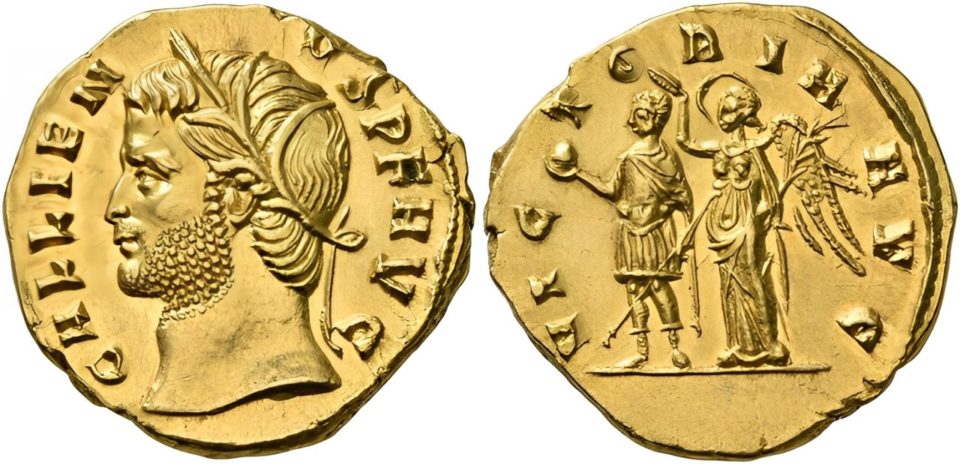
The Roman Empire, known for its vast territories and intricate governance, was not without its fair share of intrigue and scandal. One particularly captivating tale from this era involves Emperor Gallienus and a greedy merchant whose insatiable hunger for wealth led him to a dramatic confrontation with imperial authority.
Background on Emperor Gallienus
Gallienus reigned as Roman Emperor from 253 to 268 AD, a period marked by significant turmoil, including military conflicts and economic instability. Despite the challenges, Gallienus is often remembered for his attempts to reform the empire and address rampant corruption, especially within its trade systems. His reign is characterized by a strong emphasis on justice, particularly in relation to the abuse of power and wealth.
The Greedy Merchant
The merchant in question was a man named Marius, known for his wealth and influence within the city of Rome. Marius had built his fortune through various means, including dishonest trade practices that exploited both consumers and fellow merchants. He charged exorbitant prices for essential goods and often used deceptive tactics to undermine his competitors. His greed had reached such heights that he became a symbol of the corruption plaguing the Roman economy.
As Marius continued to amass wealth, he attracted the attention of Gallienus, who was keen on restoring fairness and justice in the marketplace. The emperor had little tolerance for those who took advantage of the vulnerable, and Marius’s actions did not go unnoticed.
The Confrontation
One fateful day, during a public market gathering, Gallienus decided to confront Marius directly. He disguised himself as an ordinary citizen and visited the market to witness firsthand the dealings of merchants. As he walked through the bustling stalls, he heard whispers about Marius’s exorbitant prices and unethical practices.
Emboldened by his undercover observations, Gallienus publicly denounced Marius in front of the gathered crowd. He accused the merchant of exploiting the populace and harming the very fabric of society through his greed. The crowd, inspired by the emperor’s words, rallied against Marius, shouting their discontent and demanding justice.
The Punishment
Gallienus, seeking to make an example of Marius, announced that he would impose a punishment that reflected the gravity of the merchant’s misdeeds. Instead of the typical penalties, which might have included fines or exile, Gallienus devised a unique punishment aimed at both humiliating Marius and educating the public.
Marius was stripped of his wealth and forced to sell his possessions in the very market where he had once profited from the suffering of others. He was compelled to stand at his own stall, hawking his goods at fair prices, while the emperor’s guards ensured that he could not raise them. The emperor ordered that a sign be hung around Marius’s neck, reading: “This is what greed brings: a fall from wealth to poverty.”
The Impact of Gallienus’s Decision
This act of public humiliation served multiple purposes. It not only punished Marius but also reinforced Gallienus’s commitment to justice. By demonstrating that even the wealthiest individuals were not above the law, the emperor aimed to restore faith in the system and deter others from similar greed-driven behavior.
The incident quickly spread throughout the empire, with people discussing the emperor’s actions for years to come. Gallienus became known as a ruler who valued fairness and was willing to take decisive action against corruption. The tale of Marius also served as a cautionary story for merchants and citizens alike, emphasizing the importance of integrity in trade.
Conclusion
Emperor Gallienus’s punishment of the greedy merchant Marius is a poignant reminder of the balance between wealth and ethics in society. While the Roman Empire was often fraught with challenges, Gallienus’s approach to justice showcased a ruler’s responsibility to protect the welfare of the people and uphold the values of fairness. This story remains relevant today, reminding us that greed, while tempting, can lead to downfall and disgrace. Through decisive action, leaders can inspire change and promote a culture of integrity, ensuring that the needs of the many are prioritized over the desires of the few.
