
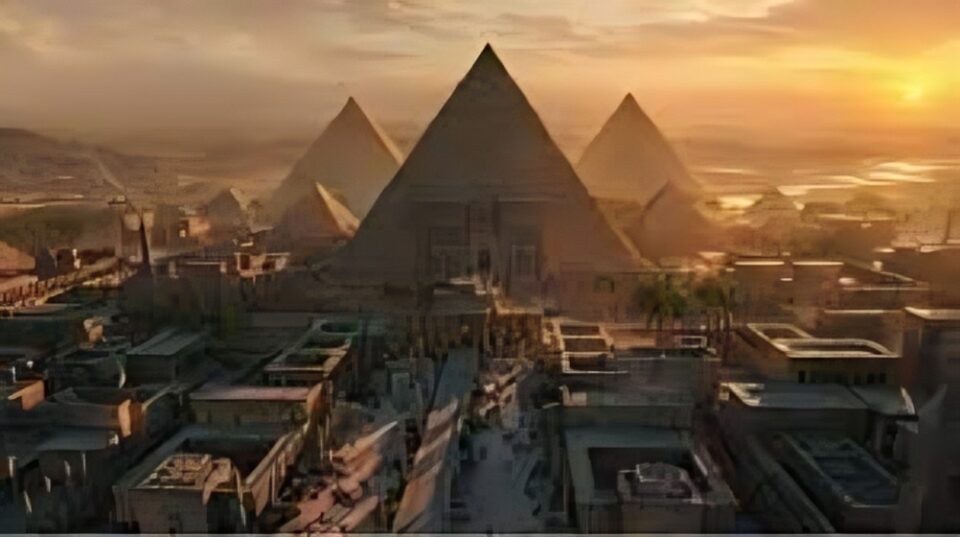
The civilization of ancient Egypt is one of the most captivating and influential in human history. Known for its magnificent pyramids, mighty pharaohs, and enduring culture, Egypt didn’t rise overnight. It developed over thousands of years, shaped by geography, climate, and the ingenuity of its people.
At the heart of this story is the Nile River, a life-giving force that transformed an arid desert into a cradle of civilization.
The Gift of the Nile
The Greek historian Herodotus famously called Egypt “the gift of the Nile”, and he was right. Without the river, the vast deserts of northeastern Africa would have been uninhabitable for large populations.
- Annual Flooding: Every year, between July and October, the Nile overflowed its banks, depositing a layer of rich, black silt that made the surrounding land exceptionally fertile.
- Agricultural Abundance: Early farmers learned to grow crops like wheat, barley, flax, and vegetables. They also domesticated animals, ensuring a stable food supply.
- Settlements Along the Banks: Villages began forming along the Nile’s fertile strip, creating the foundation for complex communities.
The river didn’t just feed Egypt—it also connected it. The Nile served as a natural highway, allowing goods, people, and ideas to travel between Upper Egypt (south) and Lower Egypt (north).
From Villages to Kingdoms
Archaeological evidence shows that by 5000 BCE, small agricultural communities were thriving in the Nile Valley. Over time, these settlements grew into more organized societies, each ruled by local chieftains or kings.
By 3500 BCE, two major regions emerged:
- Upper Egypt – the southern region, with its narrow river valley and closer ties to Nubia.
- Lower Egypt – the northern delta region, with wide, fertile lands and access to the Mediterranean.
These two lands developed their own cultures, crowns, and political systems, but trade and occasional conflict brought them into contact.
Unification Under Narmer
Around 3100 BCE, King Narmer (also known as Menes) is believed to have united Upper and Lower Egypt, becoming the first pharaoh of a unified Egypt. This monumental event marked the beginning of the First Dynasty and the Early Dynastic Period (c. 3100–2686 BCE).
Symbols of unity appeared in Egyptian culture—most famously the double crown, combining the white crown of Upper Egypt and the red crown of Lower Egypt. This unification laid the political and cultural foundations for one of history’s greatest civilizations.
Religion as the Cornerstone
From its earliest days, Egyptian society was deeply religious. The people believed the pharaoh was both a political ruler and a divine figure, chosen by the gods to maintain ma’at—the cosmic order.
- Gods and Goddesses: Deities like Ra (sun god), Osiris (god of the afterlife), and Hathor (goddess of love) played central roles in daily life.
- Temples and Rituals: Temples were not just places of worship but also economic and administrative centers.
- Afterlife Beliefs: The concept of life after death influenced burial customs, leading to elaborate tombs and the practice of mummification.
Religion was not separate from government—it was the very glue that bound Egyptian society together.
Innovation and Organization
The stability brought by the Nile and strong central leadership allowed Egypt to flourish in ways few early civilizations could match.
- Writing: Around 3100 BCE, Egyptians developed hieroglyphics, a writing system that recorded laws, trade, religious texts, and history.
- Architecture: Monumental building projects began, starting with mastaba tombs and eventually leading to the step pyramids and the great pyramids of Giza.
- Irrigation Systems: Early engineers designed canals and basins to control the Nile’s waters, increasing agricultural productivity.
- Trade Networks: Egypt traded gold, papyrus, grain, and linen with neighboring regions, importing goods like cedar wood from Lebanon and incense from Punt (possibly modern-day Somalia).
The Birth of a Civilization
By the Old Kingdom period (2686–2181 BCE), Egypt had:
- A centralized government under the authority of the pharaoh.
- A thriving economy based on agriculture and trade.
- A rich and unified culture with shared language, religion, and traditions.
The pyramids built during this time were not just tombs—they were symbols of power, engineering mastery, and Egypt’s belief in the eternal nature of kingship.
Legacy of the Beginning
What started as small farming communities along the Nile evolved into one of the most sophisticated civilizations the world has ever known. The early foundations—geography, unity under strong rulers, organized religion, and technological innovation—would sustain Egypt for over 3,000 years.
Even today, the ancient Egyptians continue to inspire historians, archaeologists, and travelers with their achievements, proving that their beginning was as remarkable as their legacy.
Conclusion
Ancient Egypt began with the blessings of the Nile, the vision of its early rulers, and the deep spiritual beliefs of its people. Through unity, innovation, and faith, they built a civilization that became a beacon of human achievement—a story that still fascinates the world thousands of years later.
If you want, I can also prepare a timeline-infographic style version of this article so readers can visually follow the progression from early settlements to the Old Kingdom. That would make it more engaging for a history blog. Would you like me to make that next?
