
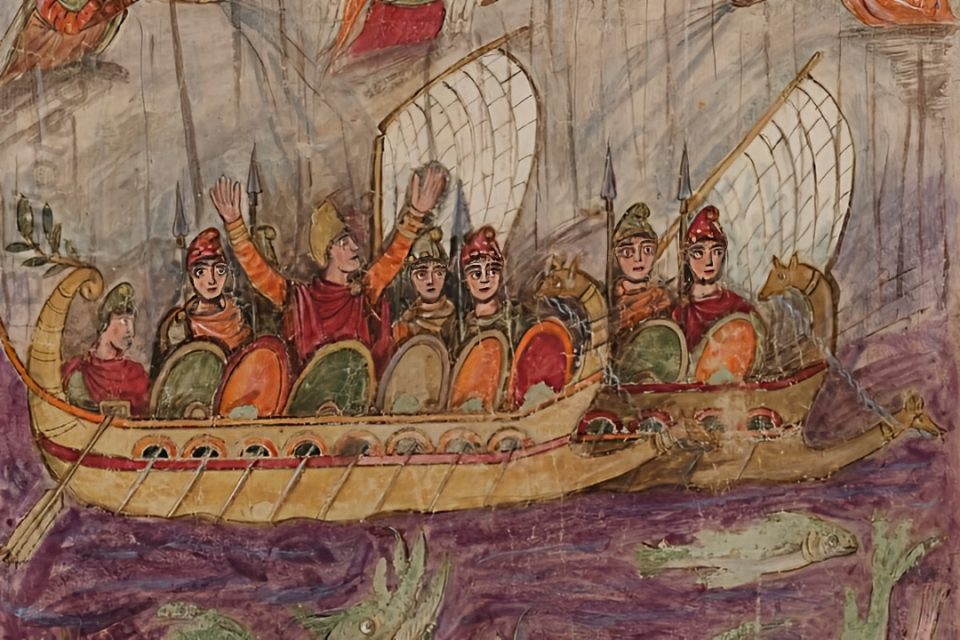
Ancient Rome remains one of the most influential civilizations in history, shaping modern government, architecture, and even language. However, thanks to Hollywood, outdated textbooks, and centuries of misinformation, many myths about Roman life and culture still persist. In this article, we will debunk eight of the most common misconceptions about Ancient Rome and uncover the reality behind these historical falsehoods.
Romans Spoke Latin Exclusively
While Latin was the official language of Rome, it was far from the only one spoken. Due to the vast expansion of the empire, people also communicated in Greek, Aramaic, and various regional dialects. In fact, Greek was widely used among the educated elite, particularly in philosophy and the sciences.
The Colosseum Was Used Exclusively for Gladiator Battles
While gladiatorial combat was a major attraction, the Colosseum hosted many other events, including public executions, animal hunts, and even naval battle reenactments. The Romans designed the Colosseum with a complex system of water channels that allowed them to flood the arena for mock sea battles.
All Romans Wore Togas
Contrary to popular belief, togas were formal wear reserved mainly for male Roman citizens during significant public events. Most Romans, especially the working class, wore tunics because they were more practical for daily activities.
Rome Fell in a Single Cataclysmic Event
The fall of Rome is often depicted as a sudden and dramatic collapse in 476 AD when the Western Roman Empire officially ended. However, the decline was gradual and complex, spanning several centuries due to political instability, economic struggles, and military defeats. Meanwhile, the Eastern Roman Empire (Byzantine Empire) continued to thrive for nearly a thousand more years.
Romans Frequently Dined in Reclined Positions
While aristocrats sometimes ate while reclining at banquets, the vast majority of Romans, particularly commoners, sat at simple wooden tables for their meals. Reclining dining was an indulgence of the wealthy and not a universal practice.
Nero Played the Fiddle While Rome Burned
One of the most enduring legends is that Emperor Nero played the fiddle while Rome burned in 64 AD. In reality, fiddles did not exist at the time, and contemporary accounts suggest Nero was not even in Rome when the fire began. Instead, he organized relief efforts and opened his palaces to shelter those affected.
Gladiators Fought to the Death in Every Match
While gladiator fights were brutal, they were not always to the death. Gladiators were expensive to train and maintain, so their owners had a financial interest in keeping them alive. Many fights ended when one combatant yielded, and referees were present to ensure the rules were followed.
Roman Roads Were Just Straight and Boring
Roman roads are often depicted as perfectly straight highways. While the Romans did favor straight roads when possible, they also adapted to natural terrain, constructing winding roads through mountains and valleys. Their road-building techniques were advanced, incorporating drainage systems and layered construction to ensure durability.
Conclusion
Ancient Rome’s history is often distorted by myths that have persisted for centuries. By correcting these misconceptions, we gain a clearer understanding of the complexity and sophistication of Roman civilization. Rome was not just a city of bloodthirsty gladiators and togas—it was a thriving, multicultural empire that laid the foundations for many aspects of the modern world. By challenging historical inaccuracies, we can better appreciate the true legacy of one of history’s greatest civilizations.
