
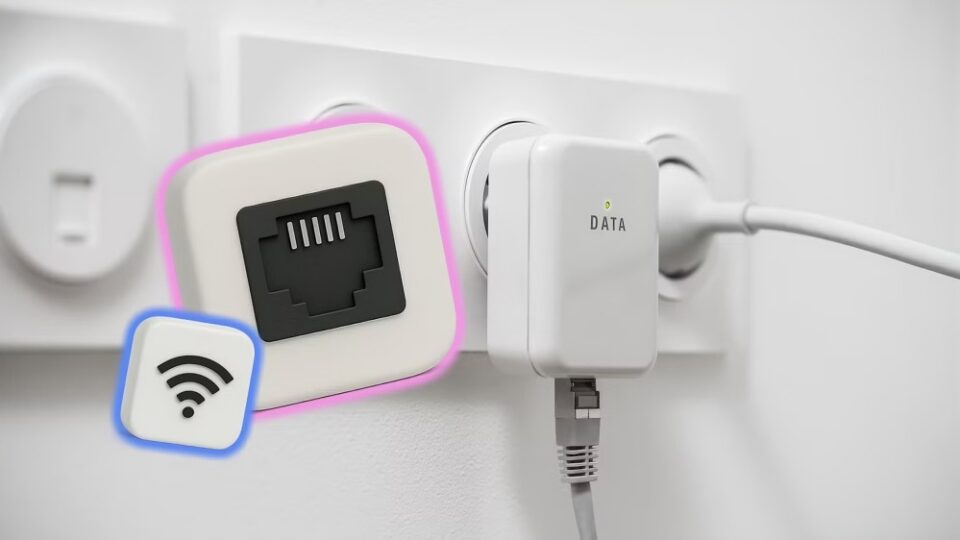
Powerline adapters are one of the most underrated solutions for solving Wi-Fi dead zones and unstable internet connections. Many people have heard of them, but few truly understand what they’re capable of—or how much potential they hold. Whether you’re streaming, gaming, or working from home, these compact devices might just be your secret weapon.
Here are 5 things you probably didn’t know about powerline adapters.
They Use Your Home’s Electrical Wiring to Transmit Internet
Powerline adapters work by sending data signals through the electrical wiring in your home. Think of your electrical outlets as a hidden network of ethernet cables—because that’s basically what they become. You plug one adapter into a wall socket near your router and another into a socket near the device you want to connect. Boom—wired internet without actual cables running across your floor.
Bonus tip: For best performance, plug them directly into the wall—not into a power strip or surge protector.
They’re More Reliable Than Wi-Fi in Many Cases
Wi-Fi can be unpredictable, especially in large homes or buildings with thick walls. Powerline adapters offer a more stable and consistent connection because they don’t rely on radio waves. They’re not affected by interference from microwaves, neighbors’ routers, or Bluetooth devices.
If you’ve struggled with dropped Zoom calls or laggy online games, switching to a powerline connection can make a world of difference.
They Can Include Built-In Wi-Fi Boosters
Not all powerline adapters are limited to wired connections. Some models also come with built-in Wi-Fi access points. That means you can extend your wireless network into rooms where the main router signal struggles to reach. It’s like setting up a secondary router without the hassle.
Look for models labeled “Wi-Fi Powerline Extenders” if you want both wired and wireless support.
Their Speed Depends on Your Home’s Electrical Wiring
Here’s a lesser-known fact: not all homes are equal when it comes to powerline performance. The age and condition of your electrical wiring can have a big impact on speed. Newer homes tend to perform better, but even in older houses, you can still get good results—as long as the wiring isn’t heavily degraded.
Also, powerline adapters typically perform best when both devices are on the same electrical circuit or breaker.
You Can Use Multiple Adapters Around the House
Many people think you can only use one pair of powerline adapters at a time, but that’s not true. Most systems allow you to pair multiple adapters to the same network. That means you can have wired connections in your living room, bedroom, office, and even the garage—without running a single ethernet cable through walls.
Just make sure all adapters are compatible and from the same brand or standard (like HomePlug AV or AV2).
Conclusion
Powerline adapters aren’t as flashy as mesh routers or Wi-Fi 6 systems, but they offer a unique combination of speed, simplicity, and stability—especially in places where Wi-Fi just won’t cut it.
So next time your signal drops or your video freezes mid-call, remember: the solution might already be built into your walls.
Would you like a shorter version for a blog intro or a carousel post?
